Copenhagen is one of the best places in Denmark for outdoor advertising. The city is dense, many people move on foot and by bike, and the same routes are used every day. But the right choice depends on two things: who you want to reach, and how they move.
Here is a practical way to choose.
Start with movement, not with format
The most common mistake is to start with the format. Start instead by asking how your audience passes the site.
Pedestrians have time. They walk slowly, wait at red lights and see the ad up close. Here the message can carry a little more, and a facade or an eye-level screen works well.
Cyclists move at 15–20 km/h, close to the buildings and with their heads up. They see a large banner clearly, but have no time for long text.
Drivers see from a distance and at speed. They have a few seconds, so the message must be short and the format large.
The three formats
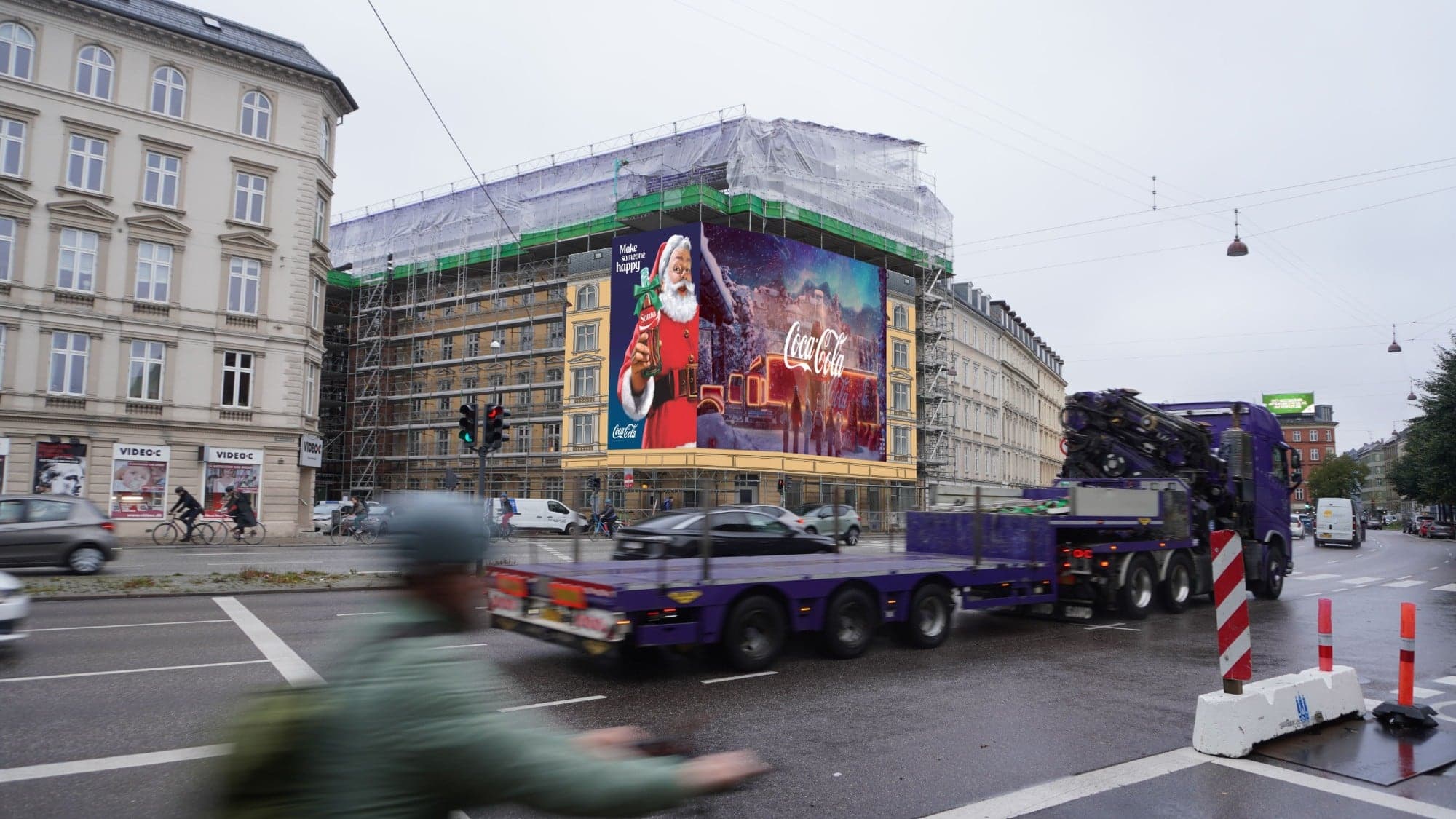
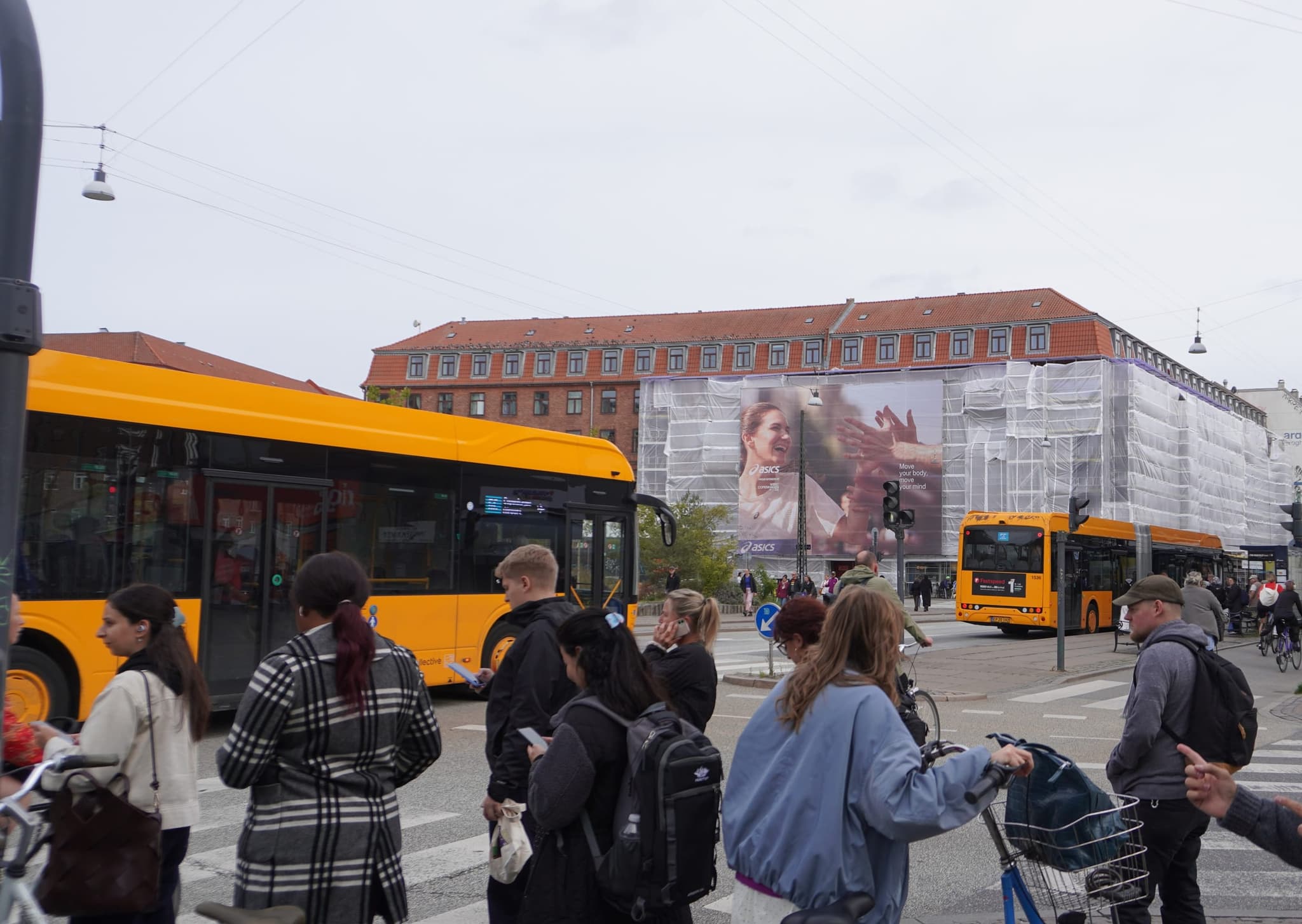
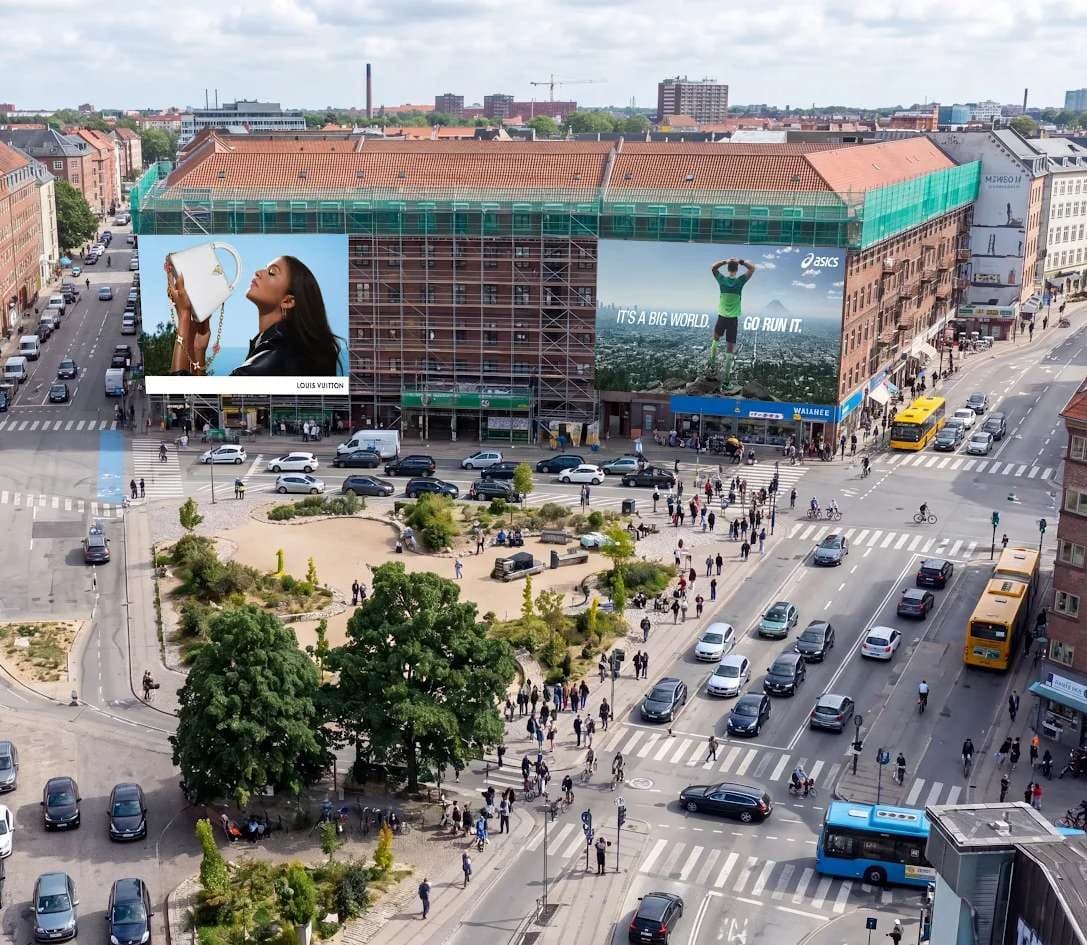
Scaffolding advertising offers the largest spaces in the city, on scaffolding around buildings under renovation. The space only exists while the works are on, so the period is usually weeks. It is the format for launches and campaigns that need to dominate. We apply for the municipal permit and handle print and installation.
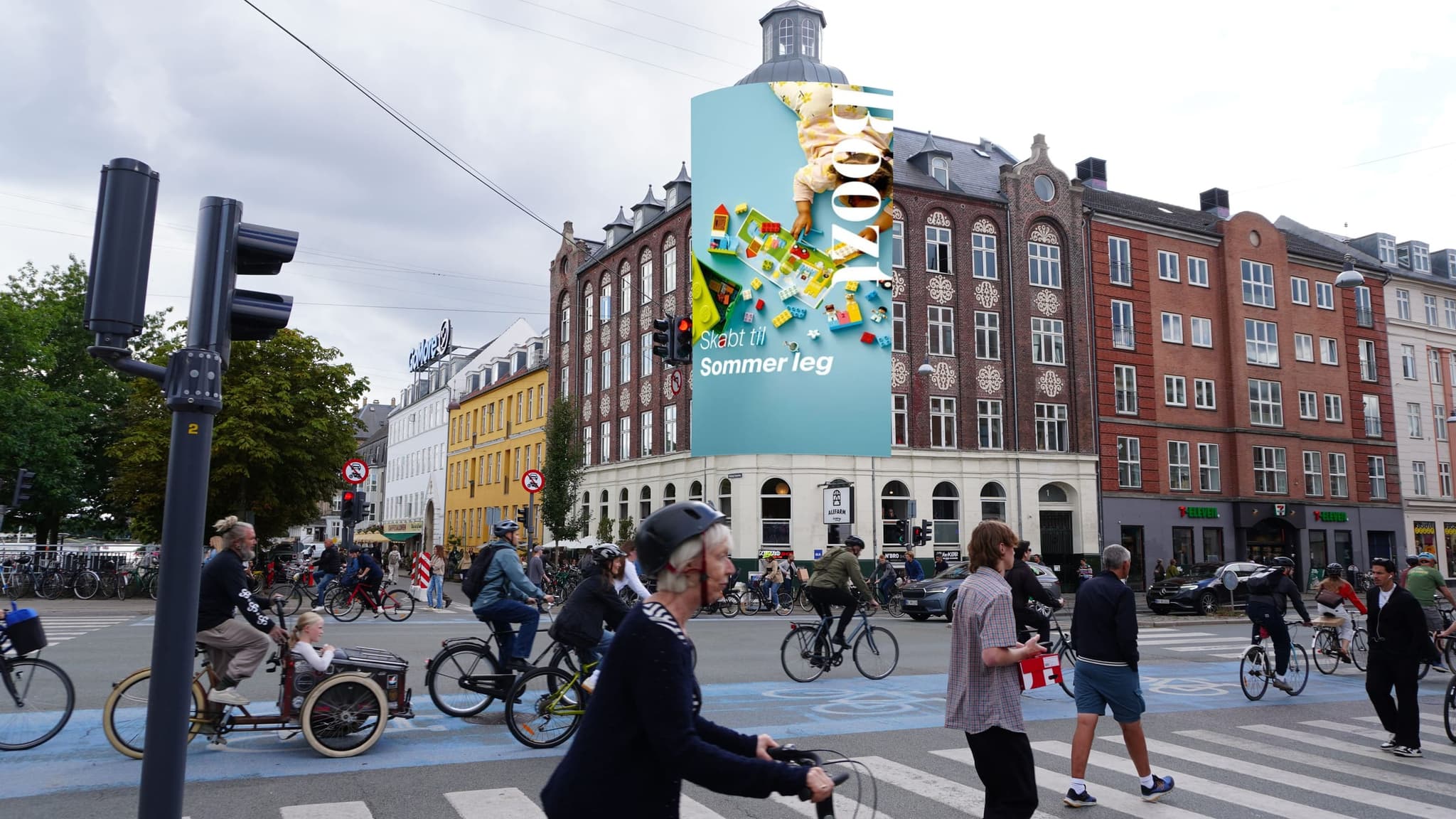
Facade advertising stays on a building's facade or gable for months at a time. It builds awareness through repetition: the same people pass the same place day after day. Our facades are ready to use, so there is no municipal application.
Digital out-of-home is an eye-level screen where you buy a share of the plays. You simply supply the files, and you can change the message during the campaign.
Where in Copenhagen
City centre. Pedestrians, shopping and tourists. The formats are smaller, but the viewer is close. Good for retail and anything meant to drive visits to a shop.
Nørrebro. Cyclists and commuters in slow traffic. At Nørrebro St., metro, bus, train and bike lane meet, and Dronning Louises Bro is the way into the city for thousands of cyclists every day.
Arterial roads. Big roads such as Åboulevard with traffic in both directions. Many people pass, so this is where the largest spaces pay off most.
How to compare sites
Three figures tell you most of what you need:
- Traffic. How many people pass per day? Each placement shows its figures.
- Size. How big is the space, and is it visible from both directions?
- Period. When is it available, and does that fit your campaign?
To see how many impressions different combinations give, try the campaign calculator. Terms such as impressions and frequency are explained in the OOH glossary.
Combine the formats
The strongest campaigns often use two formats:
- Scaffolding plus digital. A big banner creates the attention, and a screen keeps it going afterwards.
- Facade plus scaffolding. The facade builds awareness over months, and a scaffolding banner adds a lift during a launch.
A checklist before you book
- Who should see it, and how do they move past?
- How long should the campaign run?
- Can the message be read in the time the viewer has?
- What is included: print, installation and any permit?
If you have a neighbourhood or an audience in mind, write to us. You will get a proposal and a quote within 24 hours on weekdays.