The two formats look alike on a media map, but they behave differently in practice. The difference comes down to time, size and predictability.
The short version
Scaffolding banners are large, temporary and tied to construction projects. Facade banners are smaller, long-running and tied to the building itself.
That is the whole difference — but it has consequences at both ends.
Scaffolding banner
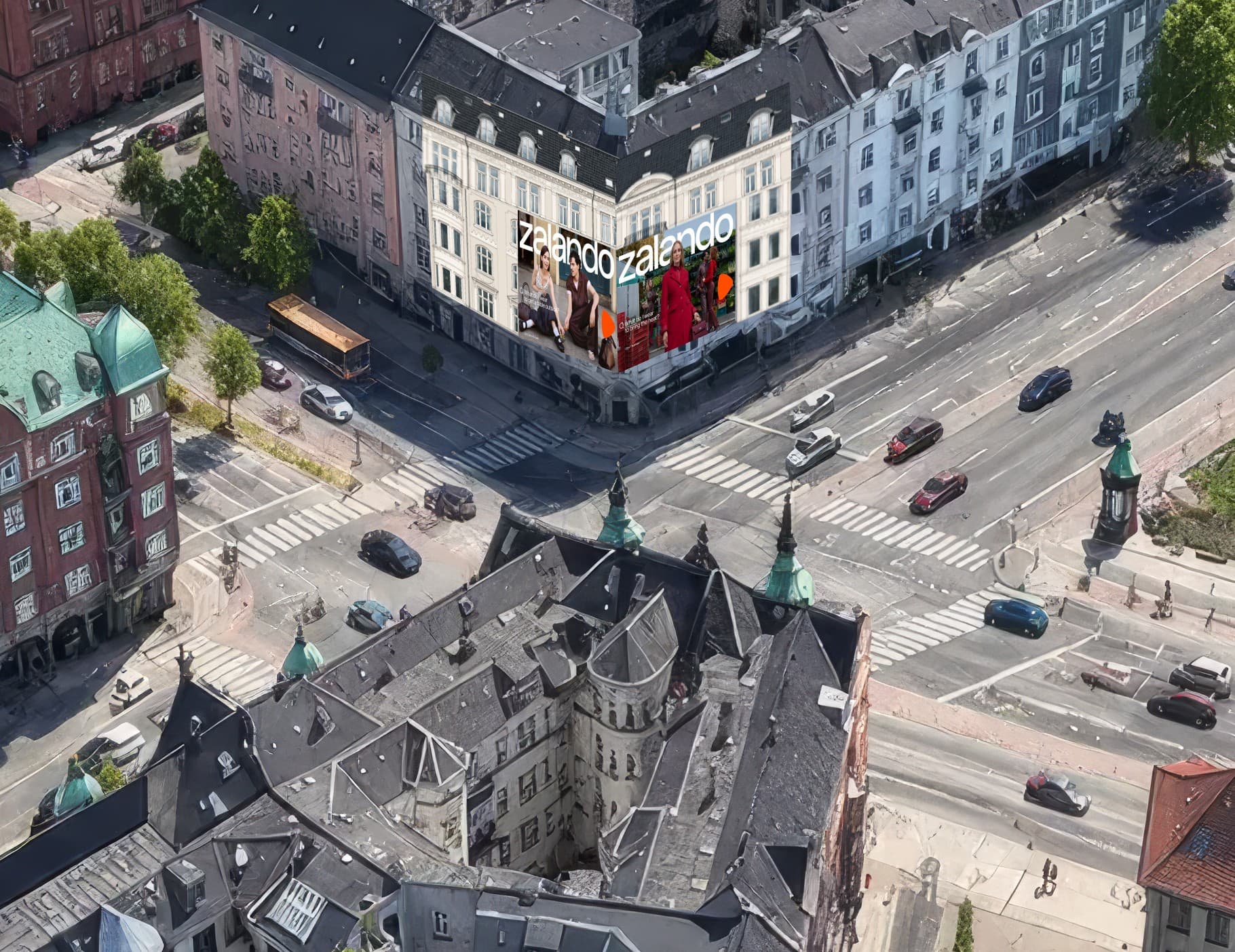
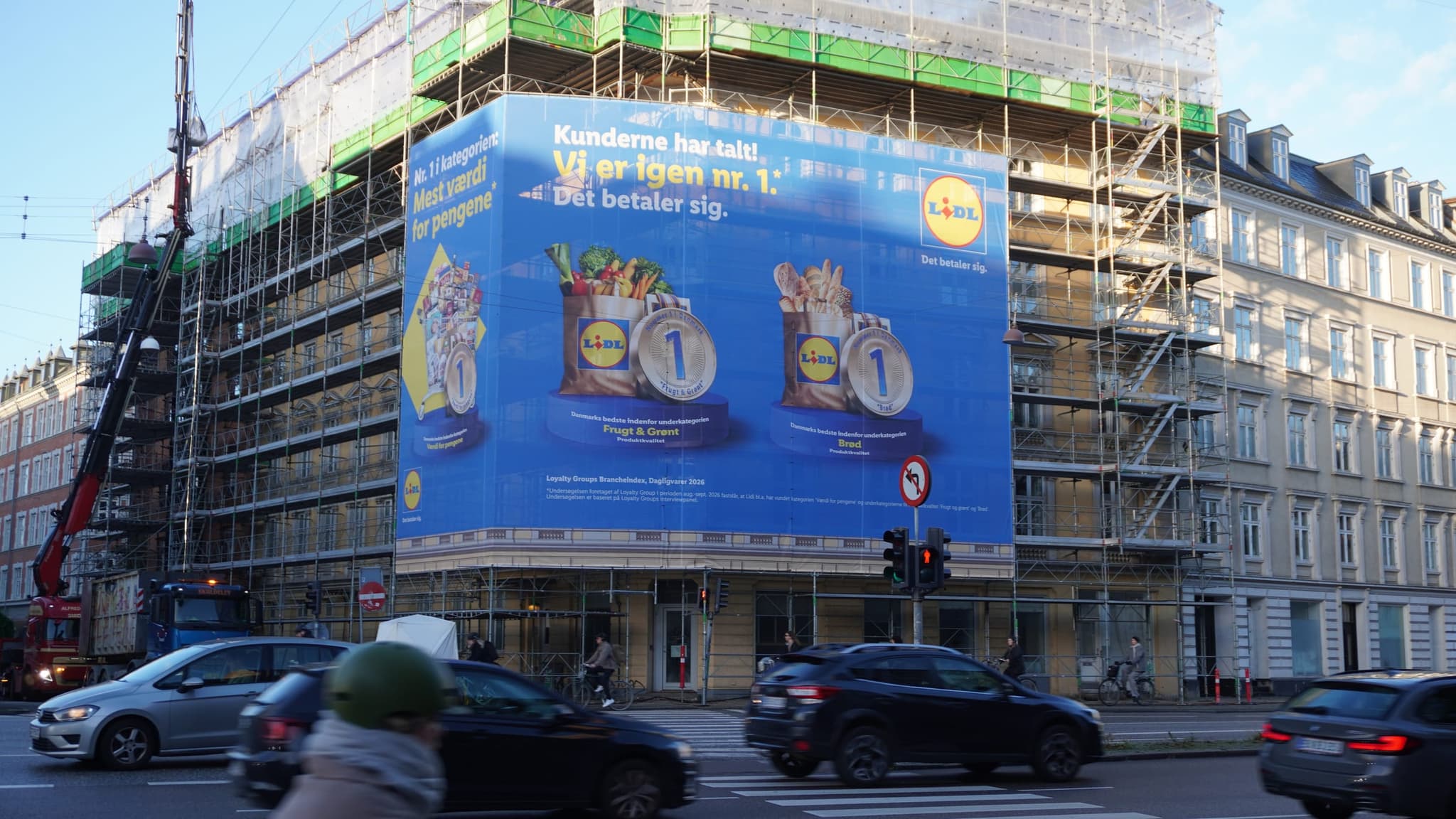
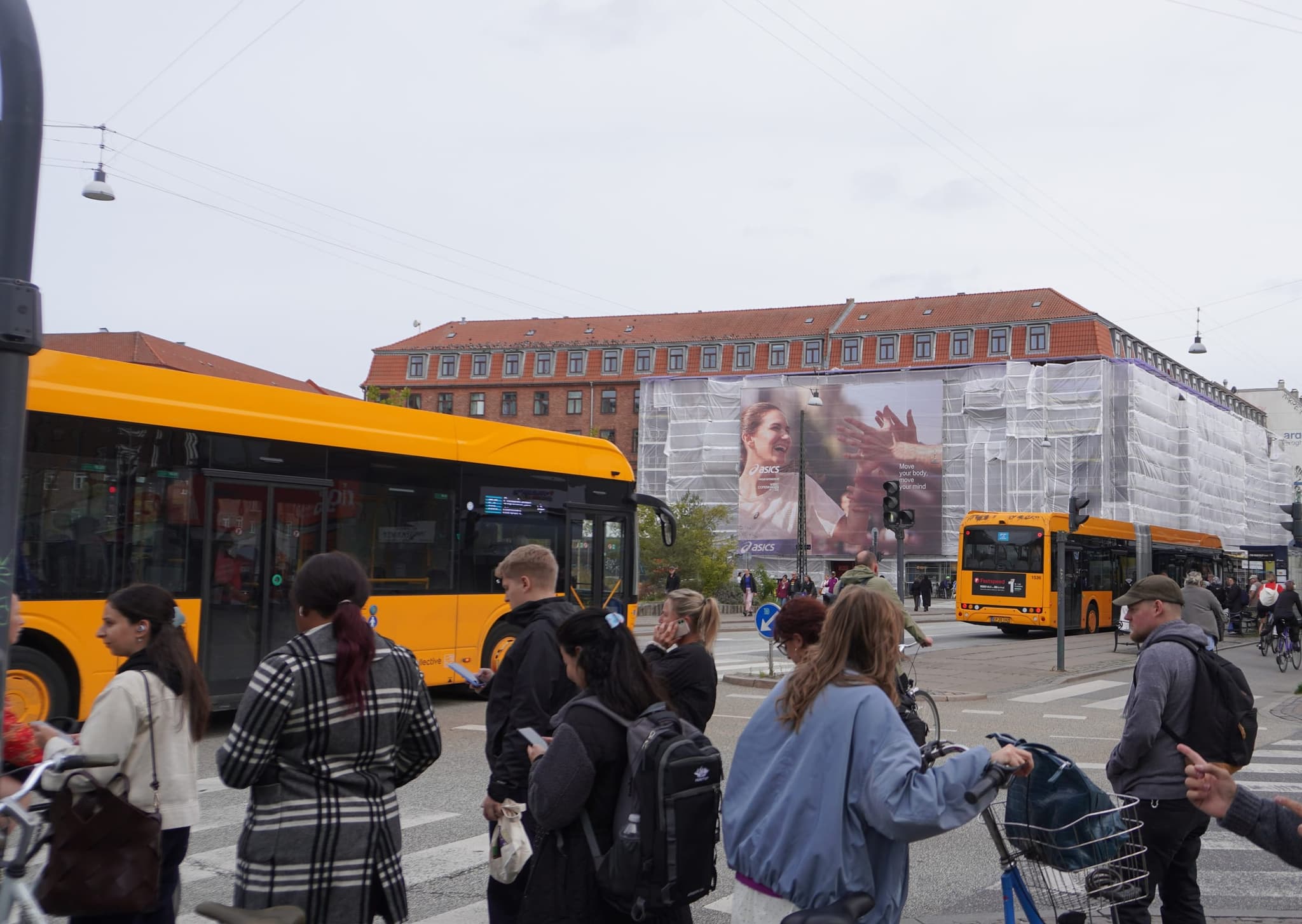
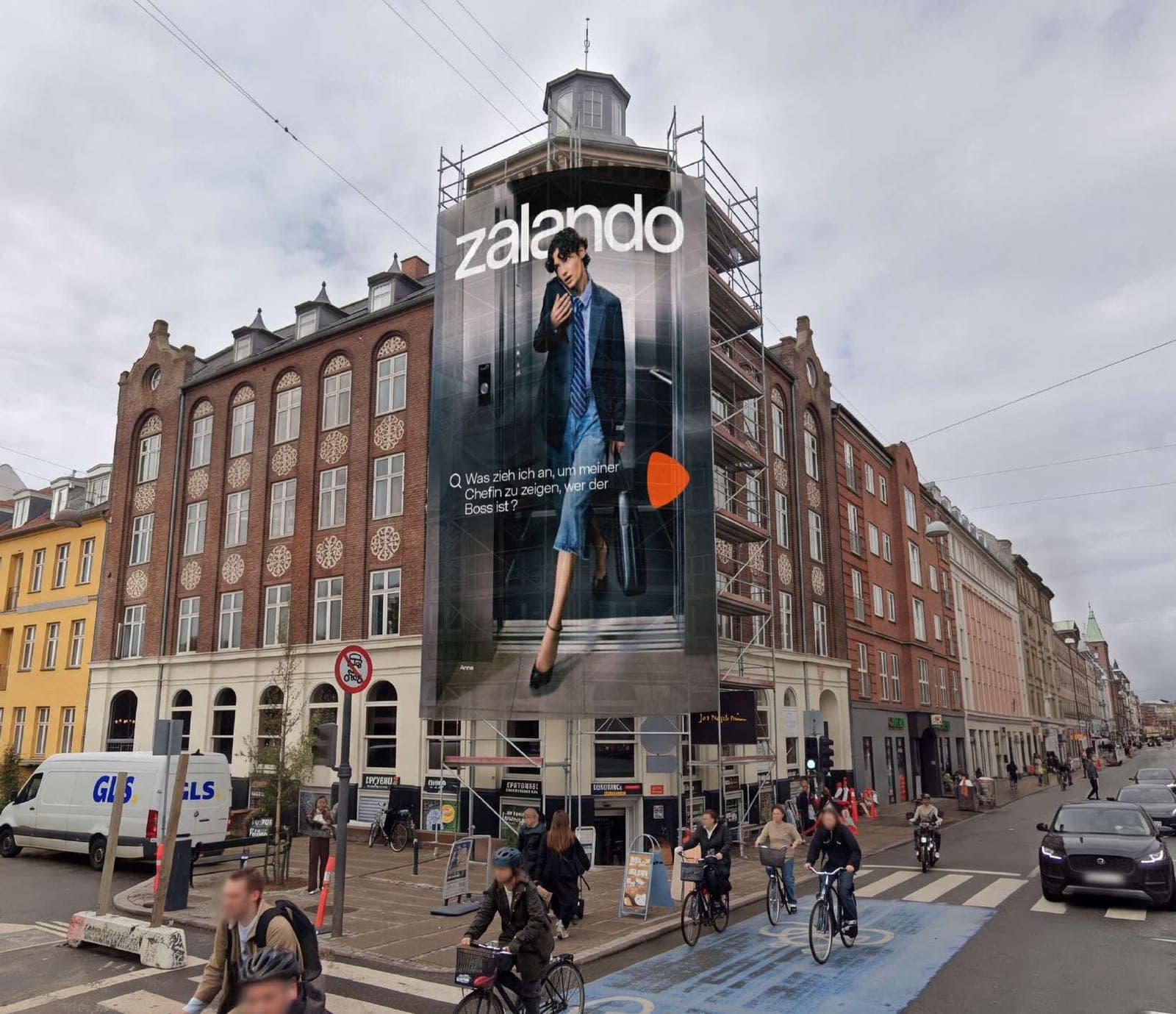
When a building is covered in scaffolding, an advertising space appears that didn't exist before. The spaces are large: 94 m² on Dronning Louises Bro, 250 m² at Nørrebro St. At that scale, the banner becomes a landmark in the streetscape for as long as it hangs.
Strengths
- Very large formats, often 80–250 m²
- Can land on addresses where permanent signage isn't possible
- High attention value, precisely because the space is new to the streetscape
- Well suited to launches, events and anything with a deadline
Limitations
- The period is set by the construction project, not by you
- Dates can shift if the construction work shifts
- Typically anything from a few weeks to a few months
- The scaffolding structure can cover parts of the space
Scaffolding banners require you to be ready to act when a space becomes available. The best periods are rarely booked far in advance — they are booked by those who say yes quickly.
Facade banner
Facade and gable banners are mounted directly on the building. The formats are smaller — typically 20 to 80 m² — but in return they are predictable.
Strengths
- Long periods, often several months or ongoing
- Fixed dates you can plan around
- Lower price per week
- Builds awareness through repetition with the same traffic
Limitations
- Smaller spaces
- Fewer addresses to choose from
- Less novelty value — the space is already there
Choose by what the campaign needs to do
Choose scaffolding if you have a launch date, an event, a season or a campaign that is about making a big impression in a short time.
Choose facade if you are building a brand over time, want fixed parameters in your media budget, or are targeting commuters who pass along the same route every day.
Combine them if you can. A large scaffolding space creates the attention, and a facade keeps awareness alive once the scaffolding has come down.
What about digital screens?
A third option has arrived. An eye-level digital screen follows neither logic: the message can be changed the same day, the space is shared with other advertisers, and you buy a share of plays rather than a period.
If the message needs to change along the way — offers, weather, day of the week — digital is the right choice. If one message needs to stand firm and make an impact, print is still strongest.
The practical question that decides it
When does the campaign need to be live, and how fixed is that date?
If the date is fixed and non-negotiable, facade is the safe choice. If you are flexible and want as much format as possible for your money, scaffolding is usually better — precisely because flexibility is what you pay less for.