The question is often framed as either-or, but the right answer depends on something more concrete: how does your audience move around the two cities? They differ markedly, and that should drive both format and budget.
Copenhagen: density and slow traffic
Copenhagen is a city where people move slowly and close to the facades. Cycling, walking and public transport account for a large share, and that changes the conditions for outdoor.
When your audience cycles past at 15 km/h or waits at a traffic light, you have more time than on an arterial road. That allows a little more content — but more importantly, it makes eye-level placements far more valuable.
Three examples from our own portfolio:
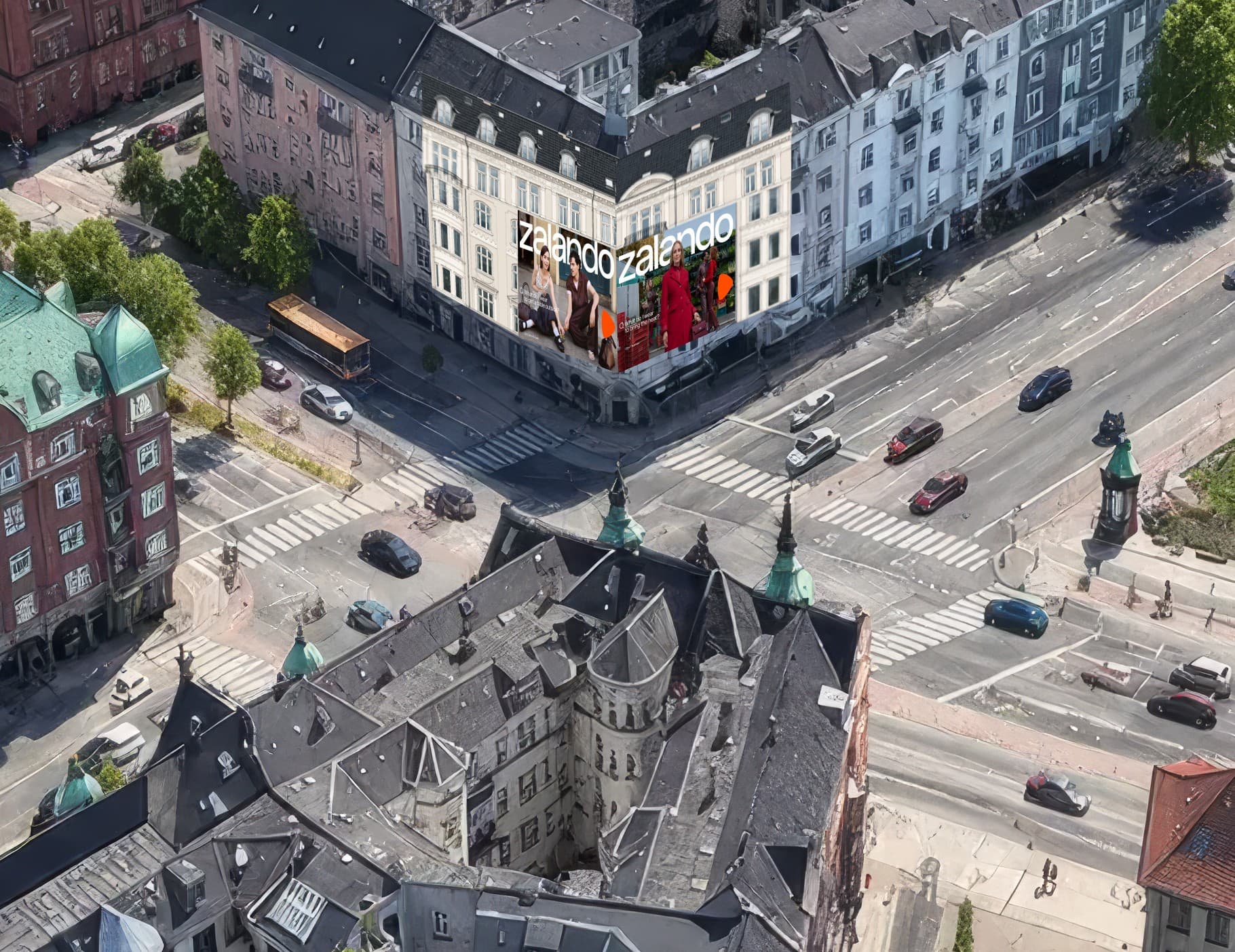
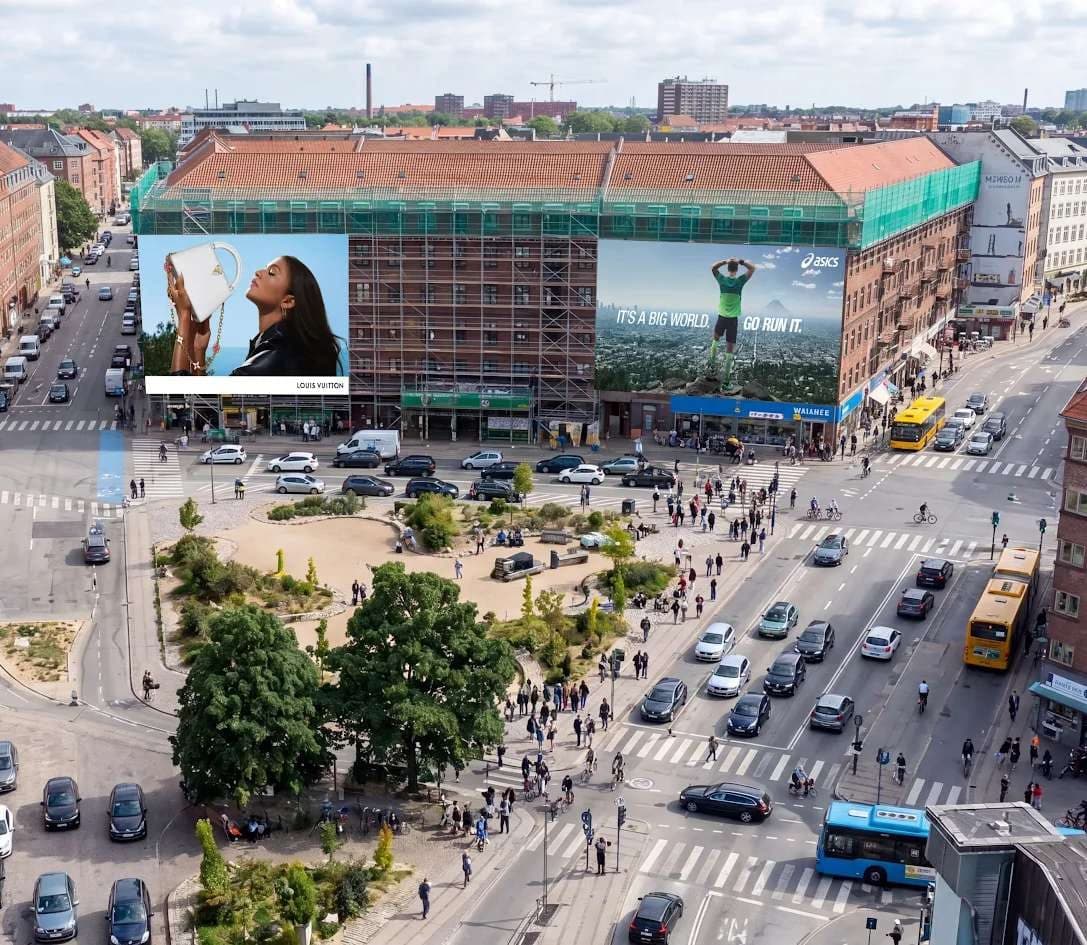
- Dronning Louises Bro — 70,000 daily · 94 m² corner tower
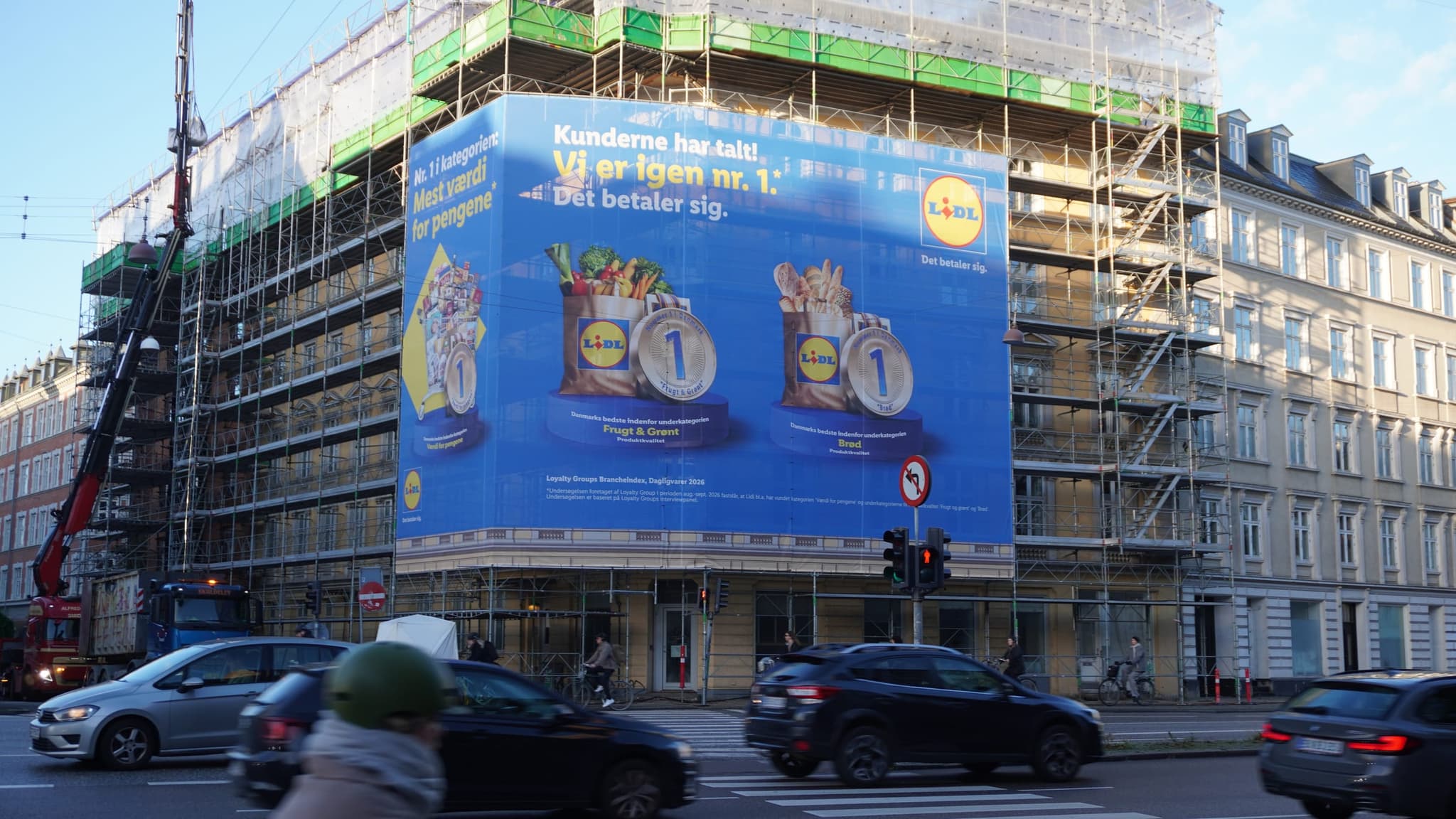
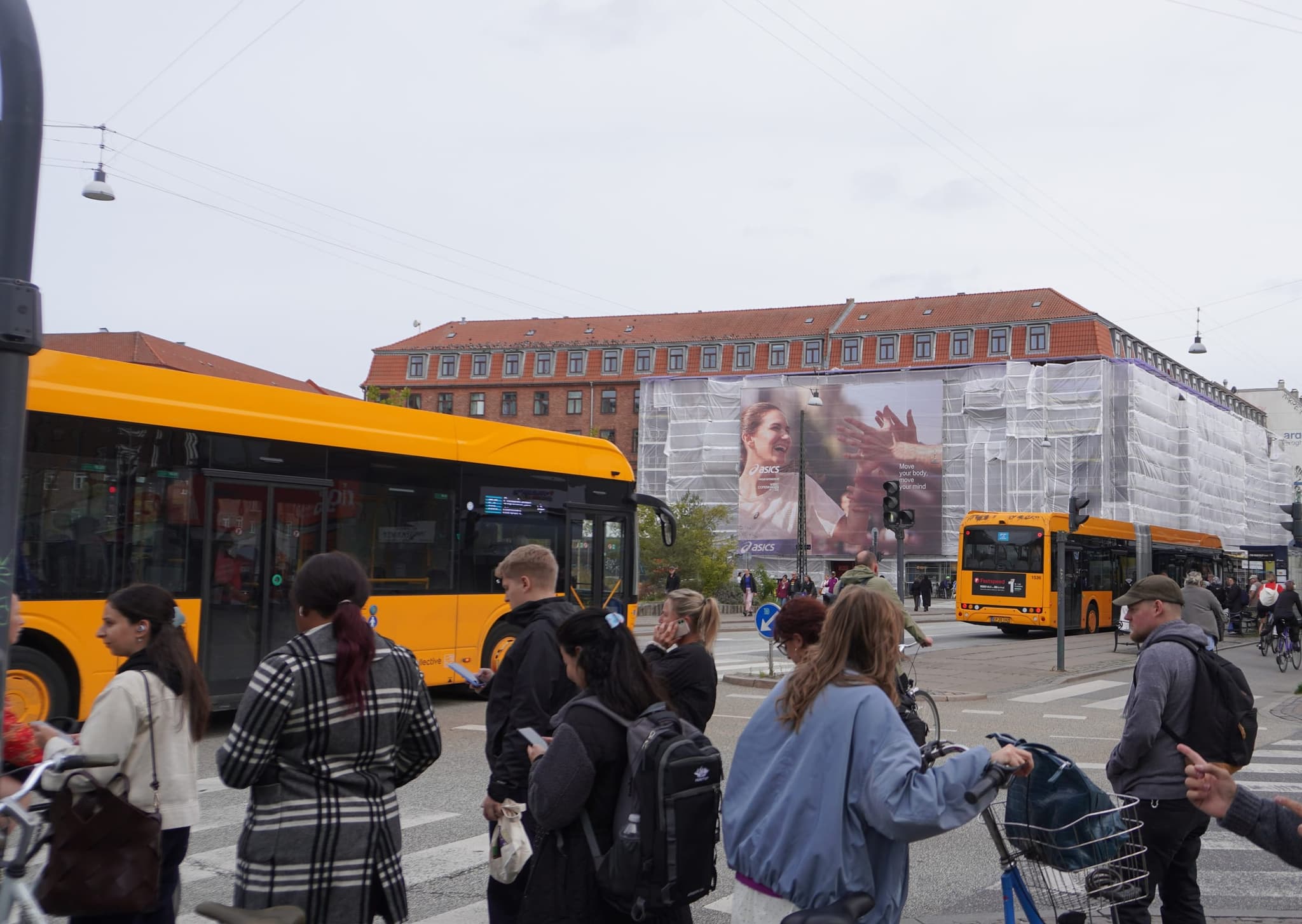
- Nørrebro St. — 60,000 daily · 250 m²
- Strøget, Frederiksborggade — 70,000 daily · 82 m² at eye level
Note the formats. You don't need 250 m² to reach a pedestrian on Strøget — but you do need the right placement.
Aarhus: speed and arterial roads
Aarhus works differently. A larger share of the traffic is drivers on arterial roads, and exposure happens at speed and at a distance.
Nordre Ringgade has 25,000 daily passers-by, Silkeborgvej 35,000. Lower numbers than the Copenhagen placements — but that is the wrong comparison. On an arterial road you reach the same people again and again: the commuter drives past twice a day, five days a week.
That produces a different kind of impact. Copenhagen delivers breadth, Aarhus delivers frequency.
Price doesn't follow the traffic count
It is tempting to calculate the CPM and pick the cheapest. But a gable banner in Aarhus and a scaffolding banner in Nørrebro aren't selling the same thing.
Aarhus placements are significantly cheaper per period. If you want to build awareness over time in Jutland, you get more frequency for your money. If, on the other hand, you want to launch something with a bang in the capital region, there is no way around the Copenhagen spaces.
How to choose
Choose Copenhagen if: you are launching a product, targeting an urban and younger audience, need volume in a short time, or want the boost in buzz that a large central space delivers.
Choose Aarhus if: you are building awareness over a longer period, targeting drivers and commuters, have a customer base in Jutland, or want more weeks out of the same budget.
Choose both if: you are running a national campaign. Then Copenhagen is the peak of the campaign and Aarhus is the sustained part.
The mistake we see most often
Choosing the city first and the format afterwards. The order should be reversed: what does the campaign need to achieve, who needs to see it, and how do those people move? Then the city follows naturally.
If in doubt, start by deciding whether you need reach or frequency. That one question usually settles it.