A campaign in the cityscape is advertising that becomes part of the city: a big banner on scaffolding, a gable facing an arterial road or a screen on a pedestrian street. It reaches people as they go about their day, and it cannot be scrolled past.
Here are the four decisions that decide whether the campaign works.
1. Choose the format
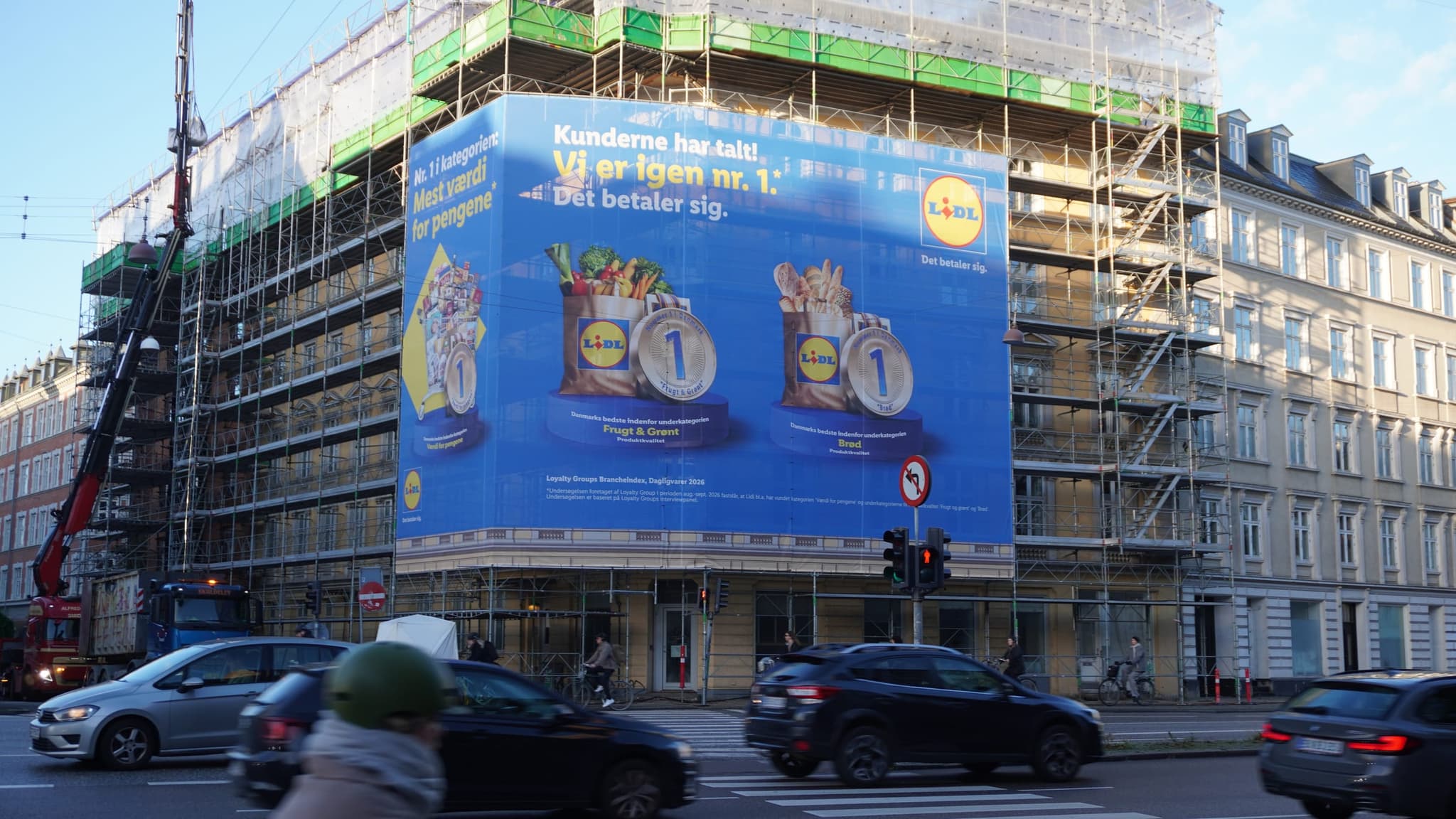
Scaffolding advertising gives the largest spaces and the biggest impact. It suits launches and campaigns that need to dominate for a period.
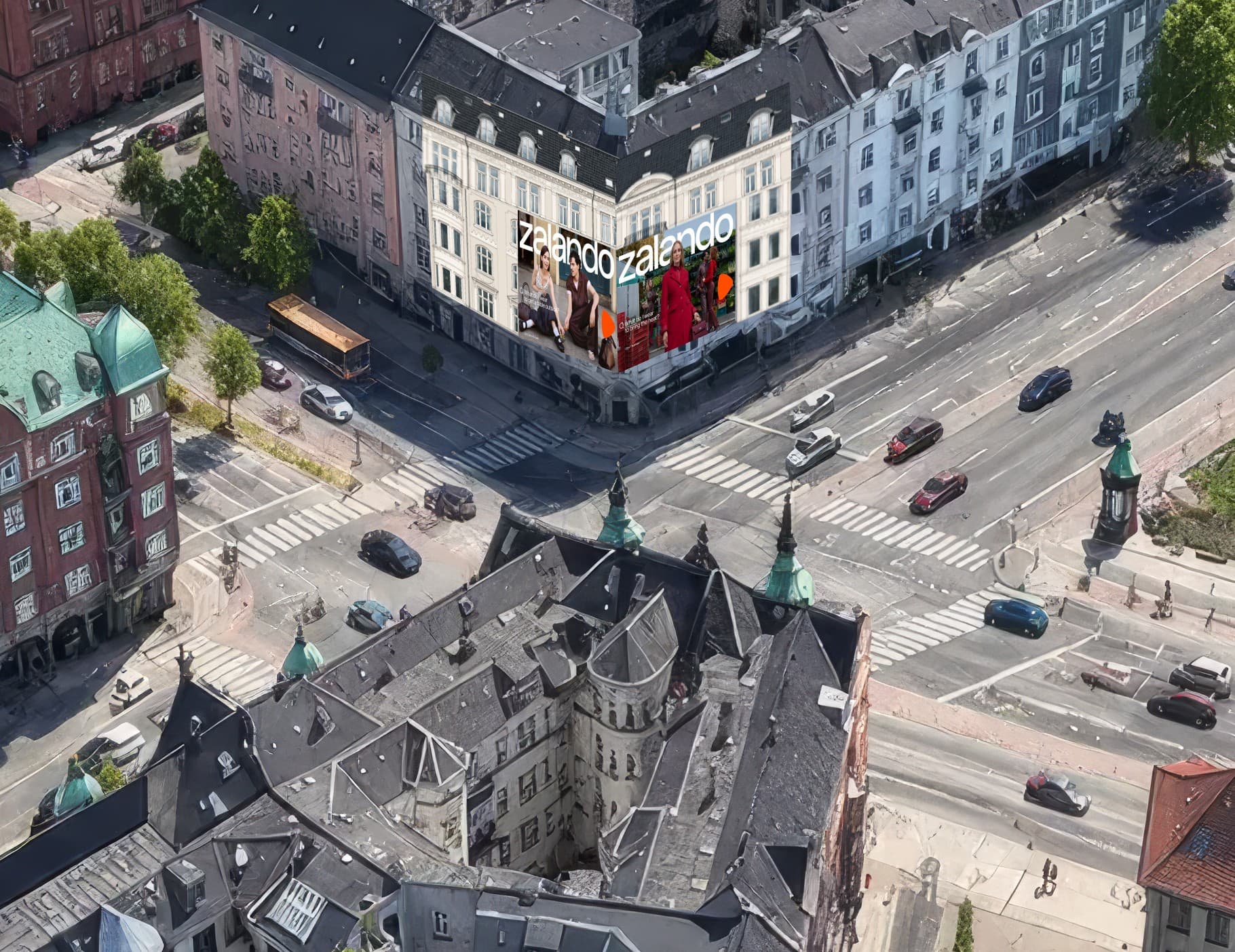
Facade and gable advertising stays up for months and builds awareness through repetition.
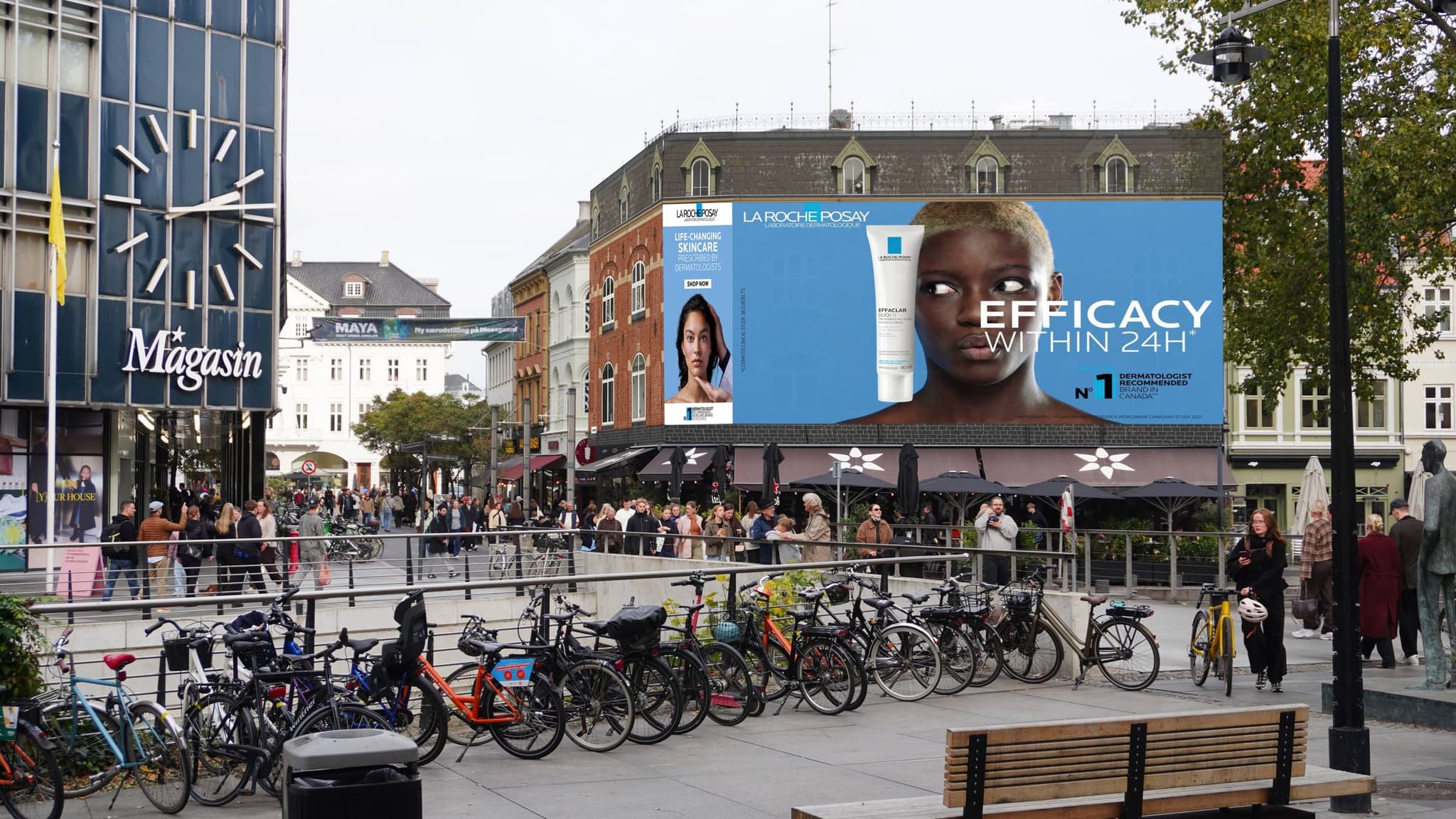
A digital screen has room for several messages you can switch during the campaign.
Read more about the three formats.
2. Choose the site
The best site is where your audience moves every day. In Copenhagen that is often pedestrians and cyclists at busy junctions. In Aarhus it is both shoppers in the centre and commuters on the arterial roads.
See all our locations for the sites available now.
3. Choose the period
A campaign in the cityscape works because people see it again and again. Plan in weeks, not days. Two to six weeks is typical for scaffolding, while a facade often stays up for months.
Book 6–12 weeks before the start, and deliver print-ready artwork at least 10 working days before.
4. Keep the message simple
A large format is seen from a distance and in passing. One image, seven words at most and a clear logo work best. See scaffolding banner specifications for more on design.
Work out the reach
With the traffic figures for each site you can work out how many times the campaign is seen. Try the campaign calculator, and read how to calculate the reach.
Want a proposal for a campaign in the cityscape? Write or call, and you will get a quote within 24 hours on weekdays.