Outdoor advertising is advertising that reaches people outside the home: on scaffolding, facades, bus shelters, screens and buses in the city. It is also called OOH or out-of-home, and the surfaces it runs on are called out-of-home media.
Here is an overview of the medium and how to choose.
Why use outdoor advertising?
Outdoor advertising cannot be skipped, scrolled past or blocked. It sits where people move, and it is seen by everyone who passes, every day of the campaign.
That gives three advantages:
- Reach. A large site at a busy junction is seen by tens of thousands a day.
- Frequency. People take the same routes every day, so they see the message again and again.
- Trust. An ad in the physical city shows that a brand is real and present.
Outdoor also makes the other media work better. People often see the ad in the city before they search for the brand. Read more about the figures in outdoor in the media mix.
The main out-of-home media in Denmark
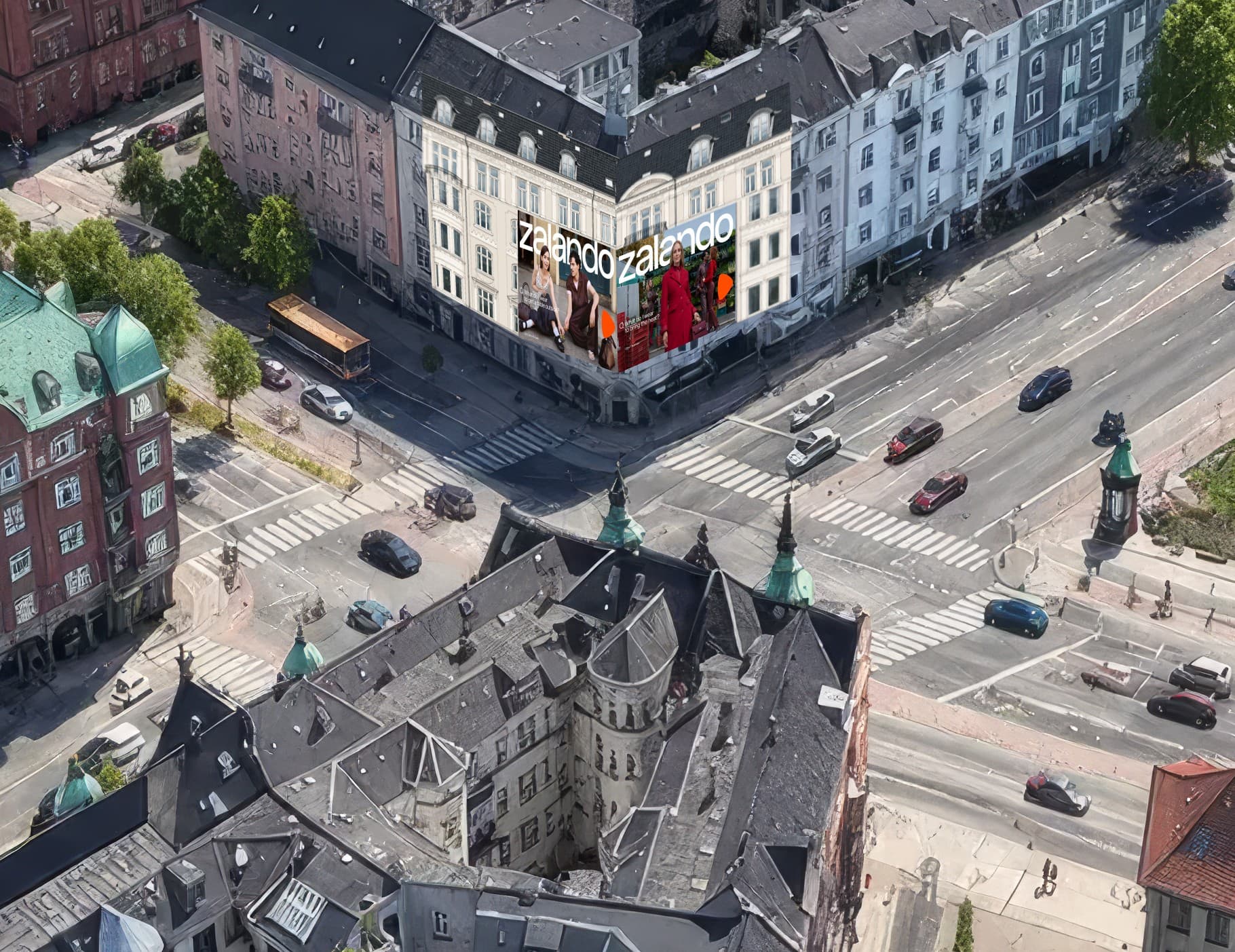
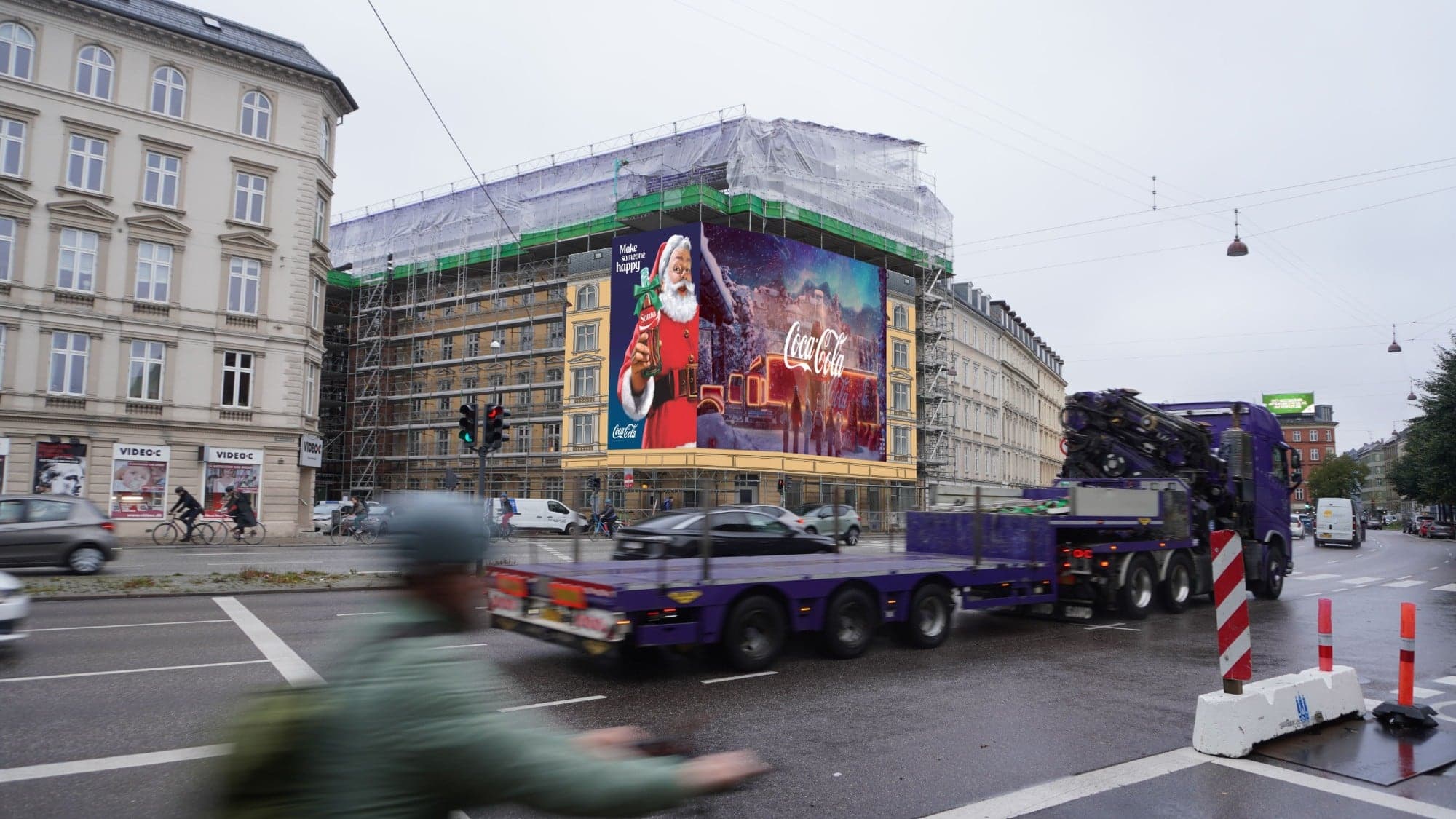
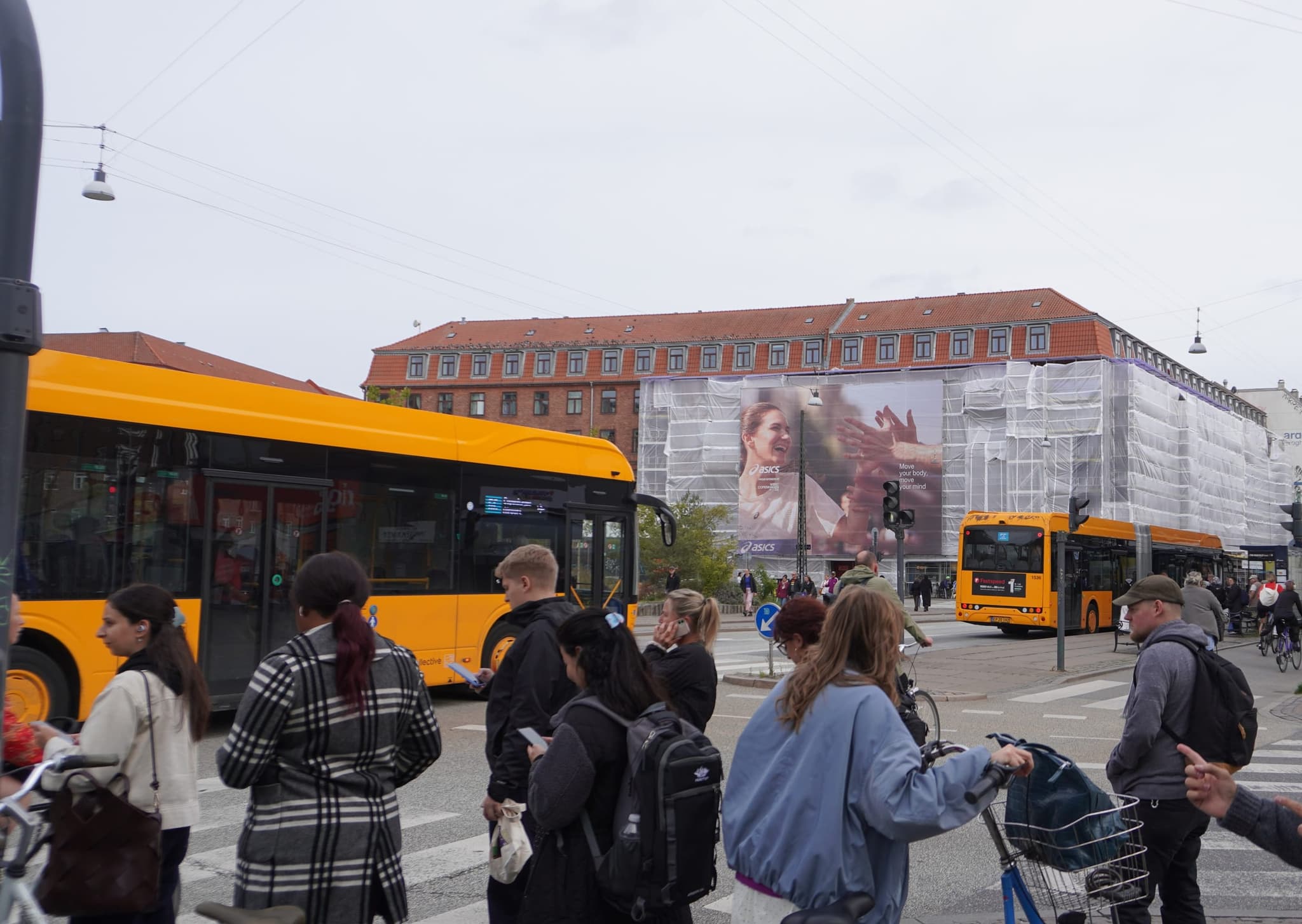
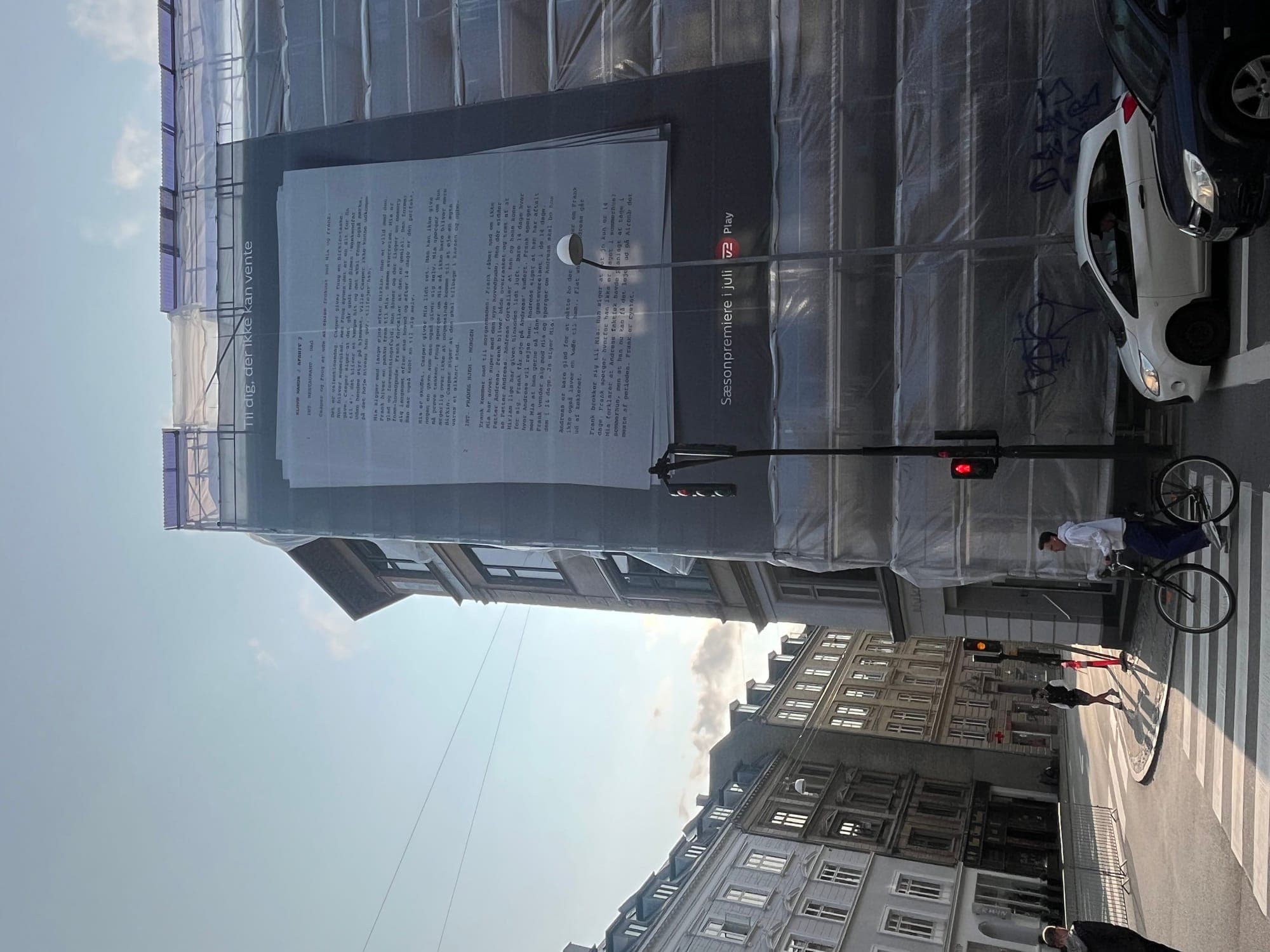
Scaffolding advertising. Large-format banners on scaffolding around buildings under renovation. The largest spaces in the city, often 100–250 m², for periods that follow the works.
Facade and gable advertising. Banners on building facades and gable walls that stay up for months. The steady format that builds awareness through repetition.
Digital screens (DOOH). Screens in public space where you buy a share of the plays and can change the message during the campaign.
Posters and billboards. Poster formats at bus shelters and on street panels, often sold as networks across a city or the country.
Transit media. Advertising on and in buses, trains and the metro and at stations, where people wait and have time to look.
Hyde Media sells the large formats: scaffolding, facades and a digital screen in central Copenhagen.
How do you choose?
Start with who you want to reach, and how they move.
- If many people need to see you quickly, for example for a launch, a large scaffolding site is a good choice.
- If you want to build awareness over months, a facade or gable fits better.
- If the message needs to change, or the budget is smaller, look at a digital screen.
Our guide to outdoor advertising in Copenhagen goes deeper into format and site.
What does outdoor advertising cost?
The price depends on the site, size, period and production. A large banner in a busy place costs more than a poster in a network, but it also gives a different kind of visibility. So compare the price per 1,000 impressions, not just the total.
See what drives the price in our price guide, and calculate the reach in the campaign calculator.
Does outdoor advertising need a permit?
It depends on the format. In open countryside, outdoor advertising is largely prohibited, so outdoor advertising in Denmark is concentrated in the cities. In the city, advertising on scaffolding generally needs a municipal permit. We apply for it on your behalf, while our facades and our screen are ready to use.
How to get started
- Decide who you want to reach, and in which city or neighbourhood.
- Choose a format based on period and budget.
- See the available out-of-home media with size, traffic and period.
- Book 6–12 weeks before the start, and deliver artwork at least 10 working days before.
Write or call, and you will get a proposal and a quote within 24 hours on weekdays. The terms in this guide are explained briefly in the OOH glossary.