Digital out-of-home — DOOH — is often presented as the successor to the printed banner. That is a poor way to understand it. The two formats solve different problems, and the pricing and logic behind them have almost nothing in common.
Here is what really separates them.
You are not buying a surface. You are buying a share
This is the most important difference, and the one that confuses people most.
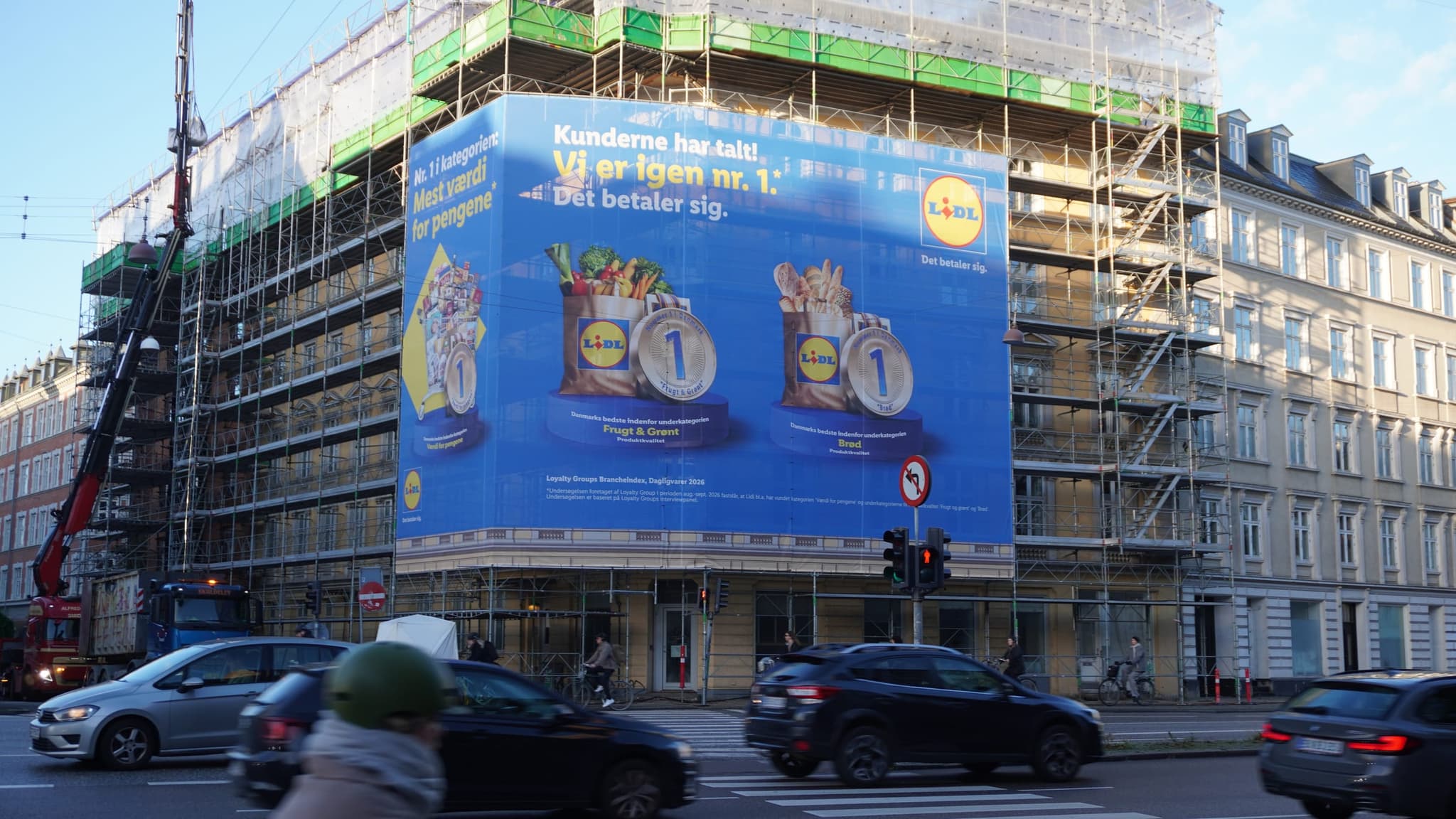
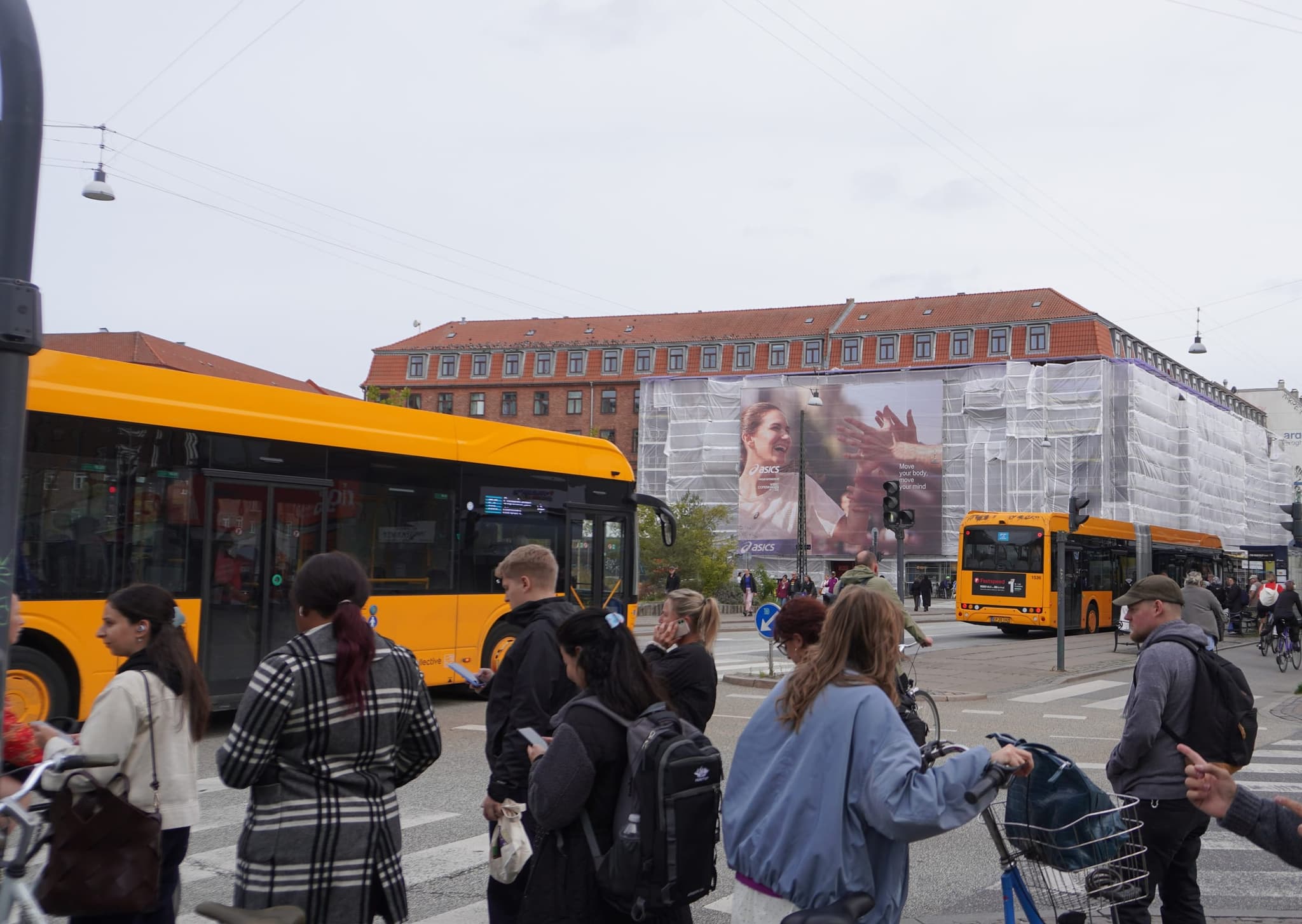
When you book a scaffolding banner, you own the entire surface for the entire period. Your message is the only thing there, around the clock, for weeks.
A digital screen is shared with other advertisers in a rotation. You buy share of voice — a share of the impressions the screen delivers. With a minimum 12% share and up to eight advertisers in the rotation, your message is shown regularly, but not constantly.
That sounds like less for the money. And it is, measured in exposure time. In return, the entry price is on a completely different scale.
The math looks different
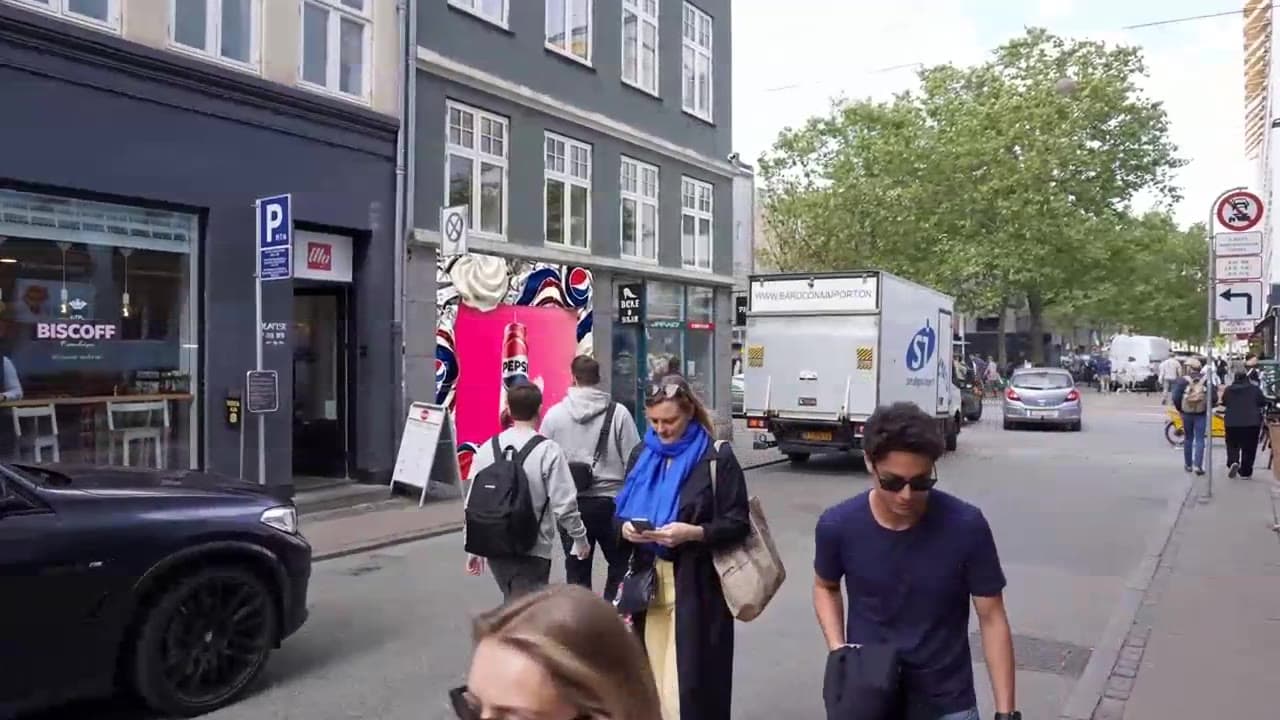
Take our screen on the corner of Gothersgade and Grønnegade as an example. 40,000 daily passers-by, roughly 280,000 weekly impressions for the whole screen, and with a 12% share you land at around 33,600 impressions a week.
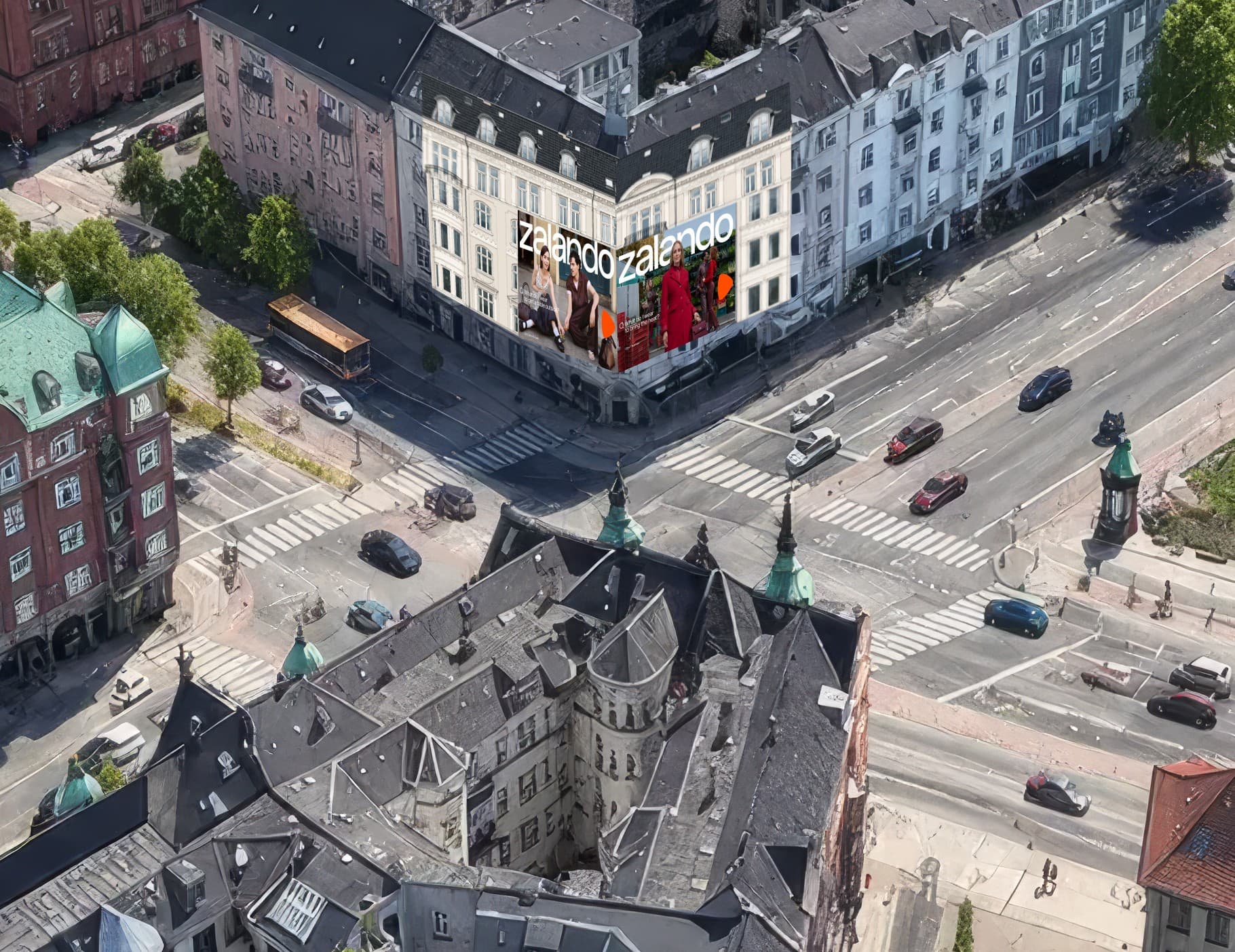
Compare that with a scaffolding banner on Nørrebrogade: the whole surface, around the clock, no sharing — but at a completely different price and with a fixed period.
The right way to frame the question is not "what is cheapest," but: Do I need to own the streetscape, or do I need to be present in it?
Four things only digital can do
1. Change the message the same day
A printed banner is locked the moment the fabric leaves the print shop. A screen can be updated within hours. That makes a real difference if you sell something where the price, stock levels or offer change.
2. Work with time of day
The screen runs daily from 06:00 to 01:00. That is eight different audiences over the course of a day: morning commuters, lunch crowds, afternoon shoppers, the evening nightlife. With print you speak to all of them with the same message. With digital you do not have to.
3. React to reality
Weather, day of the week, a campaign that suddenly gains momentum. Digital lets you tie your message to something happening right now.
4. Use motion
Video and animation catch the eye in a way a still image cannot — especially at eye level, where the viewer is close.
When you should choose print anyway
Digital is not automatically the better choice. Choose the printed banner when:
- One message needs to stand firm. A launch where there is only one thing to say
- Size is the point. 250 m² on a facade does something no eye-level screen can match
- You want to own the location. No sharing, no rotation, no other brands
- The campaign needs to be photographed. A large banner is a PR asset in itself
When digital wins
- The message changes over the course of the period
- You want to test several variants against each other
- The budget will not stretch to a large surface, but you want a central presence
- The audience is pedestrians at eye level rather than traffic at a distance
- You need to go live quickly
The strongest option is rarely either-or
In practice, the two work best together. A large scaffolding banner kicks off the campaign and builds recognition. A digital screen sustains the presence afterward — at a fraction of the price, and with the option to vary the message as the campaign evolves.
That is also how most international brands work with the channel: print for the impact, digital for the persistence.
Getting started
If you are trying DOOH for the first time, start by clarifying three things:
- Does the message change? If not, print is probably better value
- Is the audience close up or at a distance? Eye-level screens reach pedestrians, not drivers
- What will you need to evaluate it afterward? Note your baseline figures before you start
If you want to see the screen in operation and get a concrete quote for what a period costs, you can find the placement and key figures on our digital out-of-home page.