The question comes up in almost every marketing meeting in 2026: Should we invest in outdoor marketing (OOH) or digital advertising? The answer is rarely either-or — but the relationship between the two channels is worth understanding. In this article, we compare the two formats on price, reach, impact and measurability.
What Is the Difference?
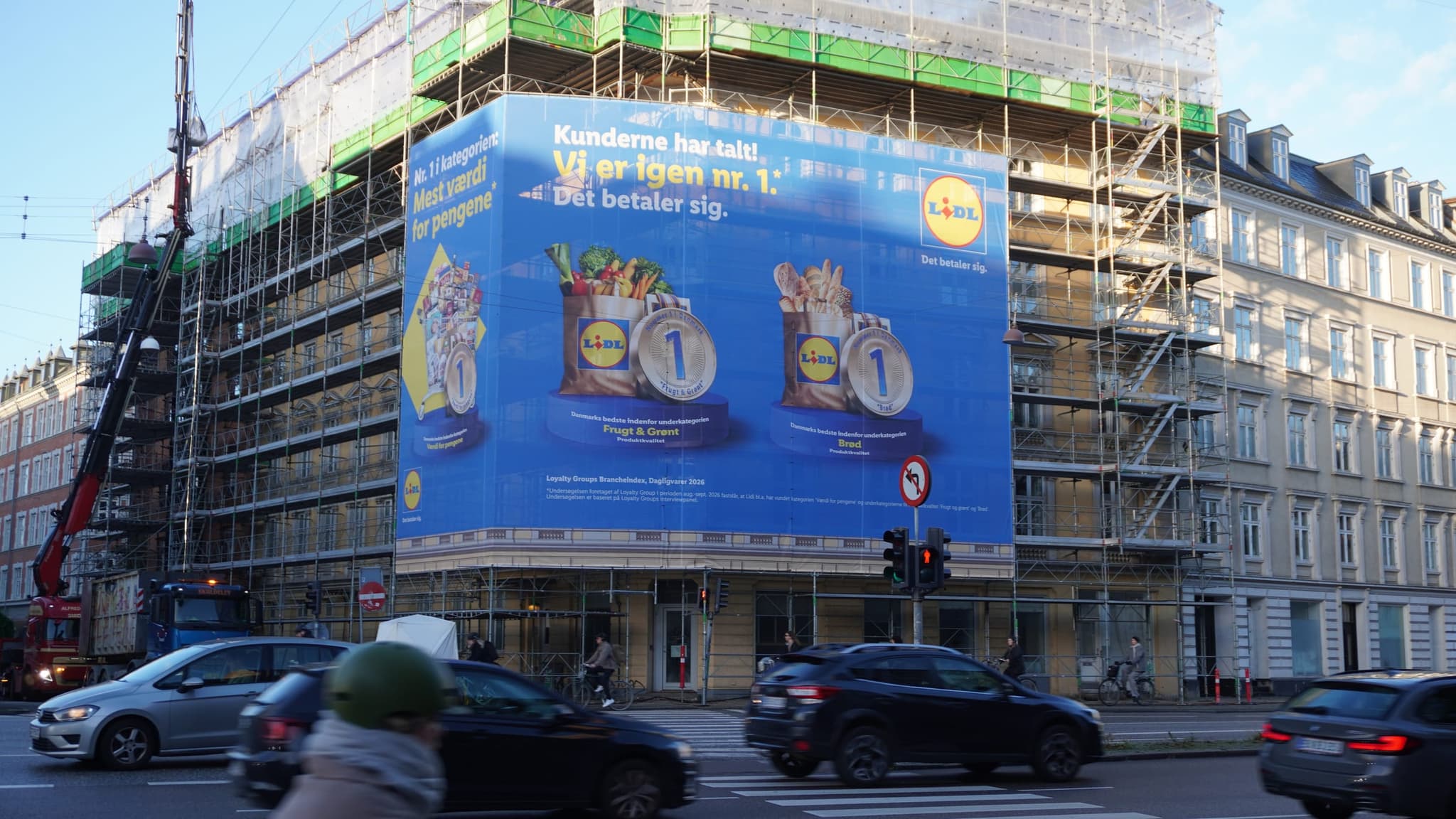
OOH (Out-of-Home) is every form of advertising in the physical cityscape: scaffolding banners, facade advertising, bus shelters, billboards, transit advertising and so on. The message is static or partly dynamic and reaches you in physical space.
Digital advertising covers Google Ads, Meta platforms, programmatic display, video platforms, podcast ads and every other form of online advertising. The message is delivered through a screen.
Price: CPM and Reach Cost
Cost per mille (CPM) — the price of reaching 1,000 people — is one of the best benchmarks for comparing channels.
Digital CPM (2026 level, Danish market):
- Meta (Facebook/Instagram) display: DKK 30-90
- Google Display Network: DKK 15-60
- YouTube pre-roll: DKK 50-150
- Programmatic display: DKK 25-80
OOH CPM (our scaffolding placements):
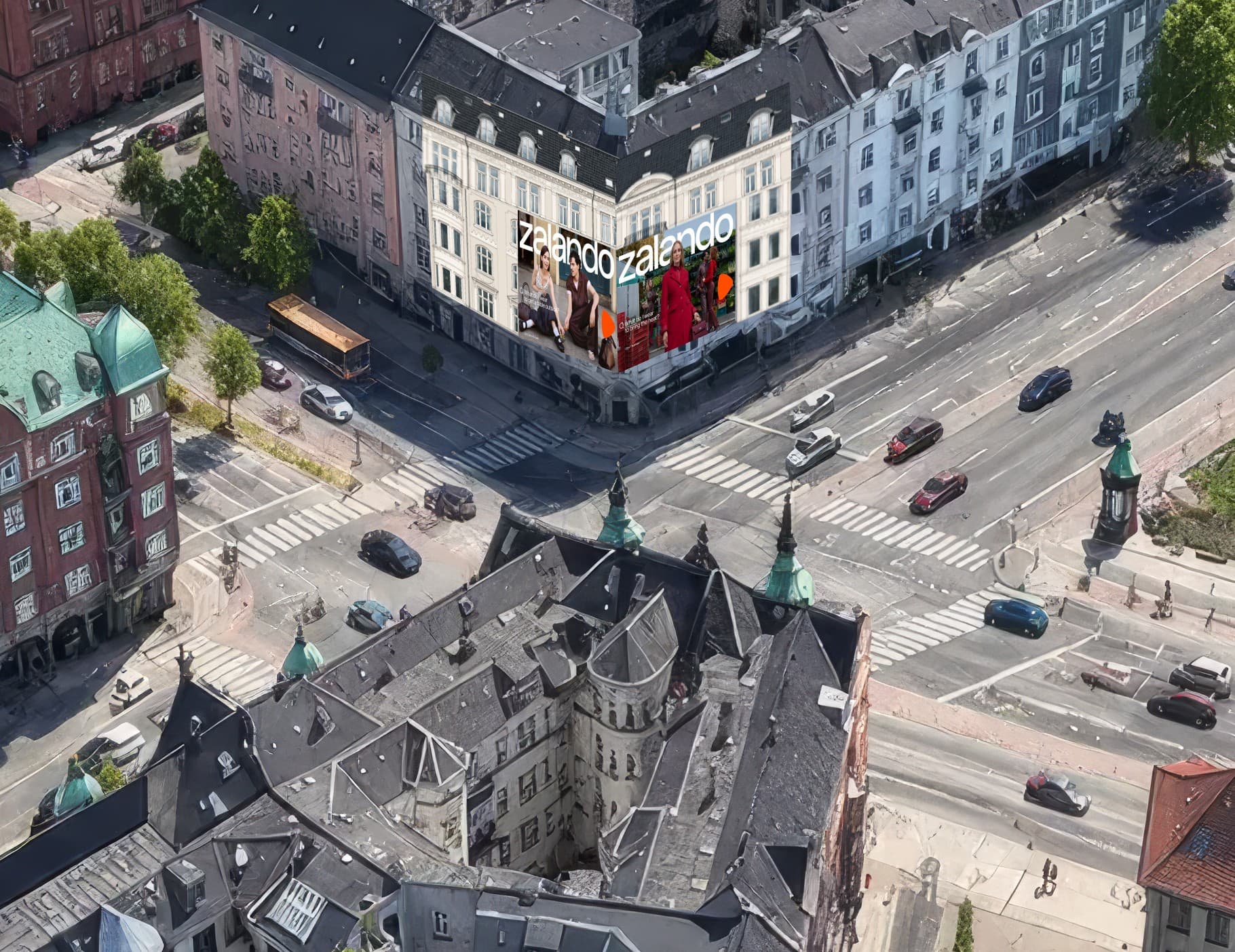
- Premium Copenhagen (170 m² Frederiksberg, 4 weeks): DKK 15-40
- Standard Copenhagen (80-140 m², 4 weeks): DKK 10-30
- Aarhus placements (50-100 m², 4 weeks): DKK 8-25
On paper, OOH is typically 2-4x cheaper than digital per impression. But the comparison is complicated by other factors (see below).
Reach: Who Sees It?
Digital: You can target very precisely — age, interests, geography, past behavior. On the other hand, you are competing with thousands of other ads for the same person's attention. Ad blocker usage is over 30% in Denmark (2026), so a large share of your audience never sees you at all.
OOH: You cannot target individuals — but you reach everyone who passes the placement. No ad blockers, no scrolling past, no mute button. At a placement like Nørrebrogade, you reach 55,000 people daily, regardless of which browser or app they use.
For brands that want to build broad brand awareness, OOH wins clearly. For brands that want to reach a specific niche, digital wins.
Brand Recall: Who Remembers It?
This is where OOH really stands out. Studies from Nielsen, Outsmart and Kantar consistently show:
- OOH brand recall: 38-65% (depending on format and exposure)
- Digital display brand recall: 8-18%
- Video pre-roll recall: 20-35%
The explanation is simple: a 140 m² banner cannot be ignored. It is a disruptive impression that breaks into your attention in a way a small ad in a feed cannot. Brands like Apple, Netflix and Nike use OOH for exactly this reason — even the biggest digital companies recognize that physical visibility builds lasting brand recall.
Measurability: The Classic OOH Weakness?
Historically, the biggest criticism of OOH has been: "We can't measure it." In 2026, that is no longer quite true:
- QR codes and short URLs track direct response from OOH to web
- Geolocation data from mobile operators can measure exposure per placement
- Brand lift studies measure awareness before/after a campaign
- Search volume tracking typically shows marked increases in brand keywords during OOH campaigns
When OOH is used alongside digital, you can even see a digital lift: digital CTRs typically rise 15-30% during a parallel OOH campaign, because the brand is already familiar when the person sees the digital ad.
When Should You Choose OOH?
OOH is the right choice when:
- You are launching a new brand or product
- You want to build trust and legitimacy
- You want to reach a broad audience in a specific geographic area
- You want to overcome digital "blindness" among high-intent customers
- Your message can be condensed to 7 words or fewer
When Should You Choose Digital?
Digital wins when:
- You have a complex message that needs explaining
- You want to target very specifically (e.g. B2B decision-makers)
- You have a short response window (e.g. a flash sale)
- Your product is online-only and cannot be bought in physical stores
- Your budget is under DKK 30,000 (that is typically the entry budget for OOH)
The Right Answer Is Almost Always: Both
Most successful brands in 2026 use OOH as top-of-funnel (building awareness) and digital as lower-funnel (converting demand). The split typically varies:
- B2C consumer brands: 60% OOH, 40% digital
- B2B service brands: 30% OOH, 70% digital
- Local businesses: 70% OOH, 30% digital
- E-commerce: 40% OOH, 60% digital
Our Recommendation
If you have a brand marketing budget that has not included OOH yet, start with a test. Our scaffolding placements in Copenhagen and Aarhus are ideal for a 4-6 week campaign that gives you data on brand lift, search volume and social signals. Most brands see a clear effect as early as weeks 2-3.
Contact us for a free consultation on how OOH fits into your marketing mix — or read our other guides on prices and rules.