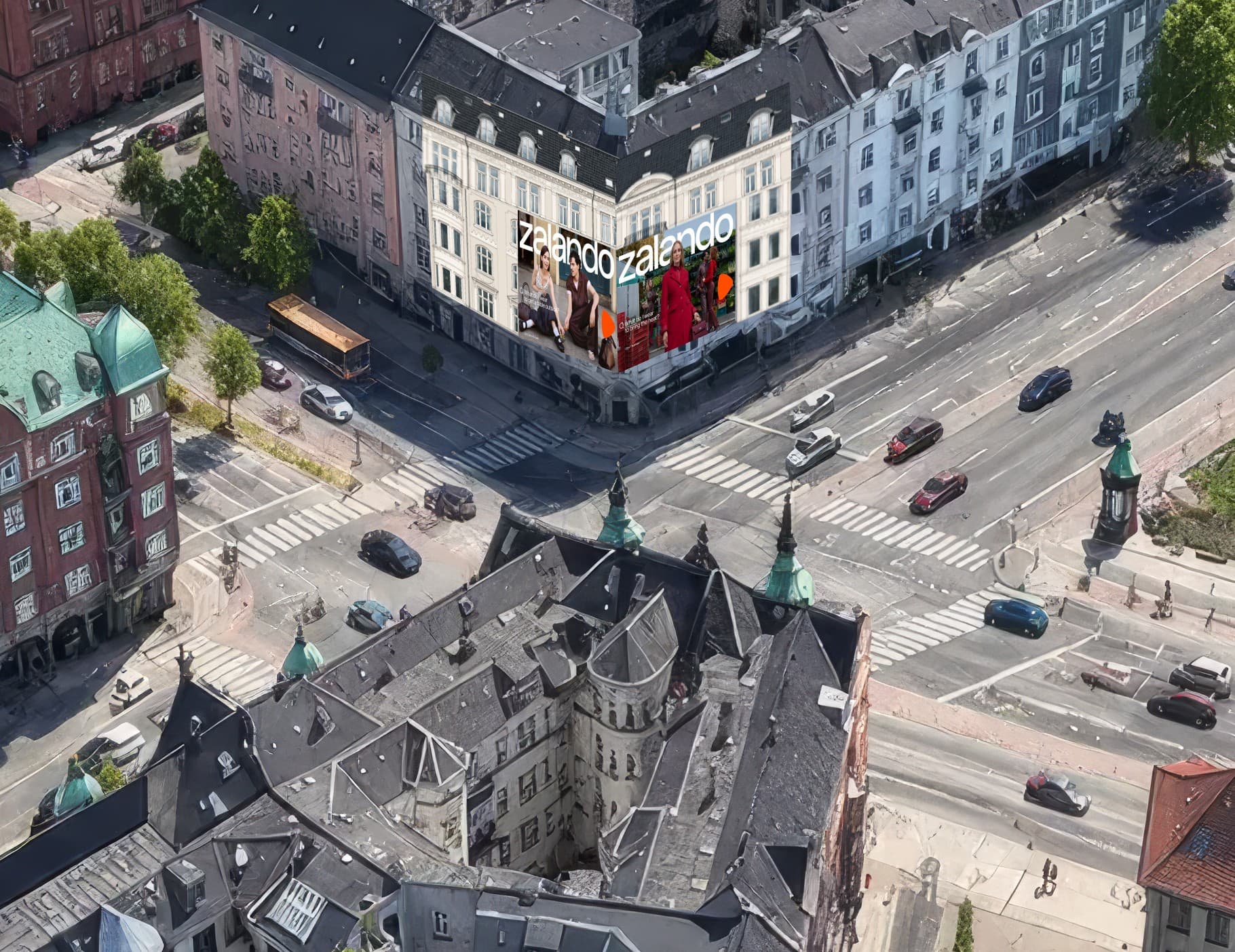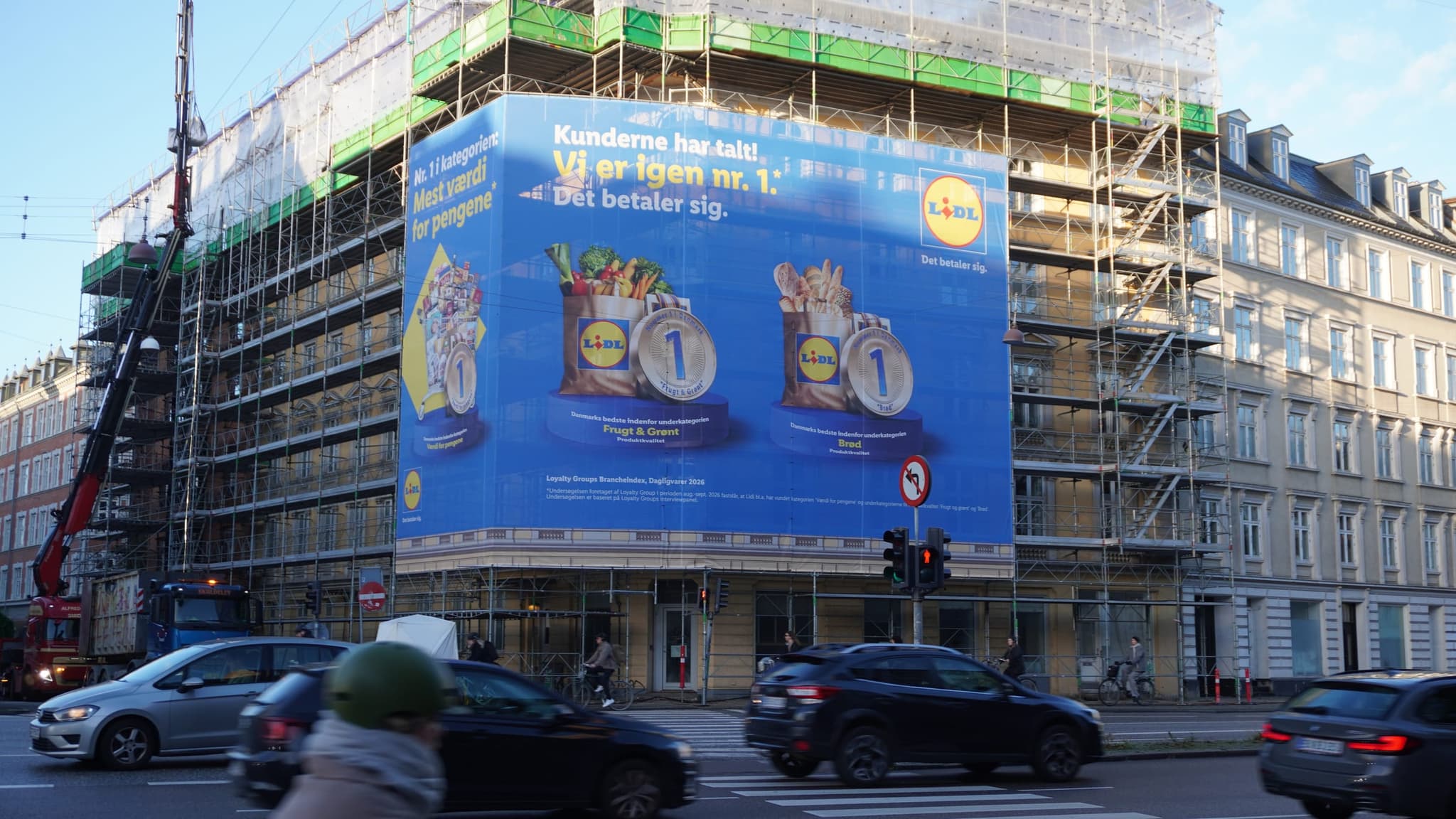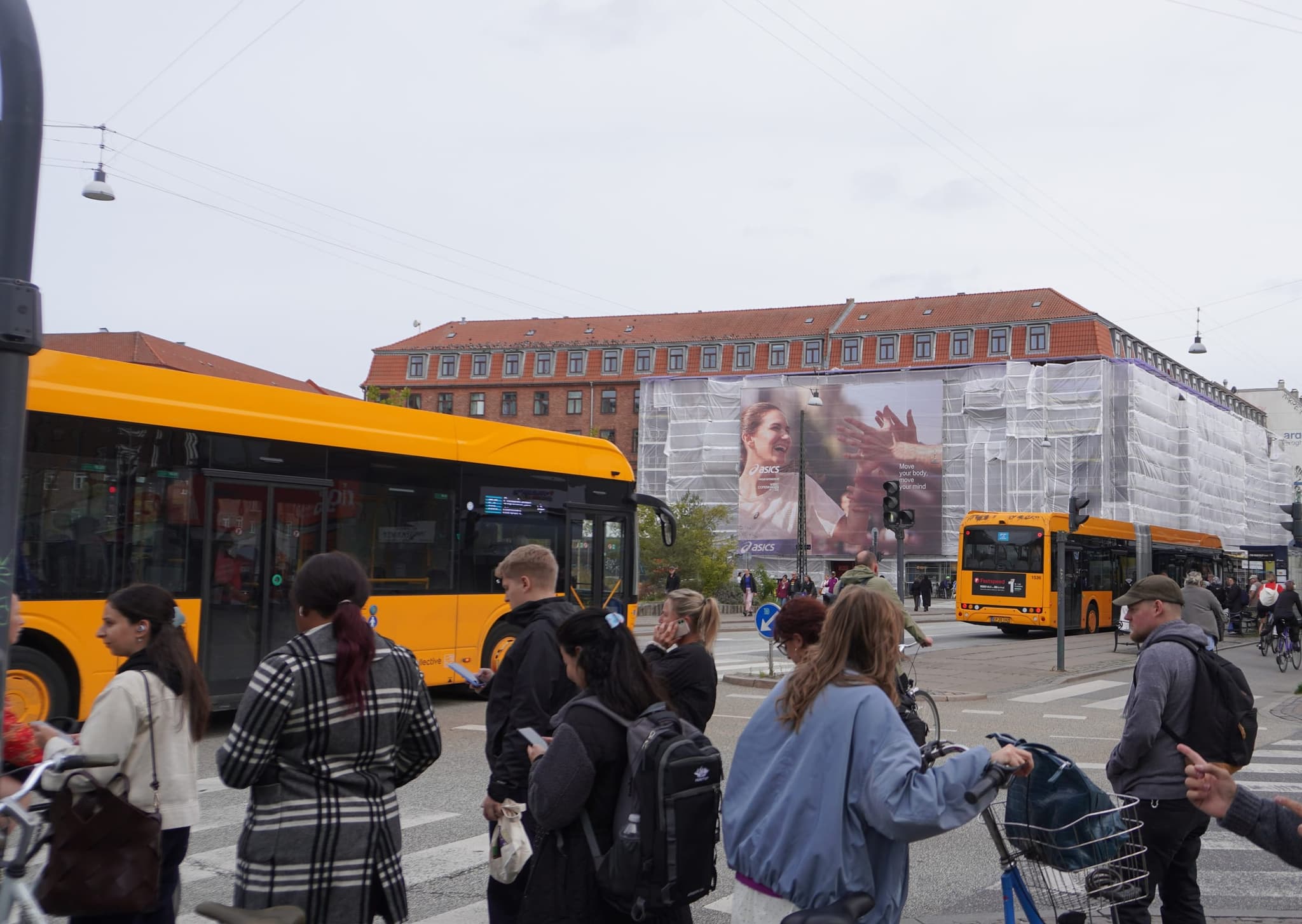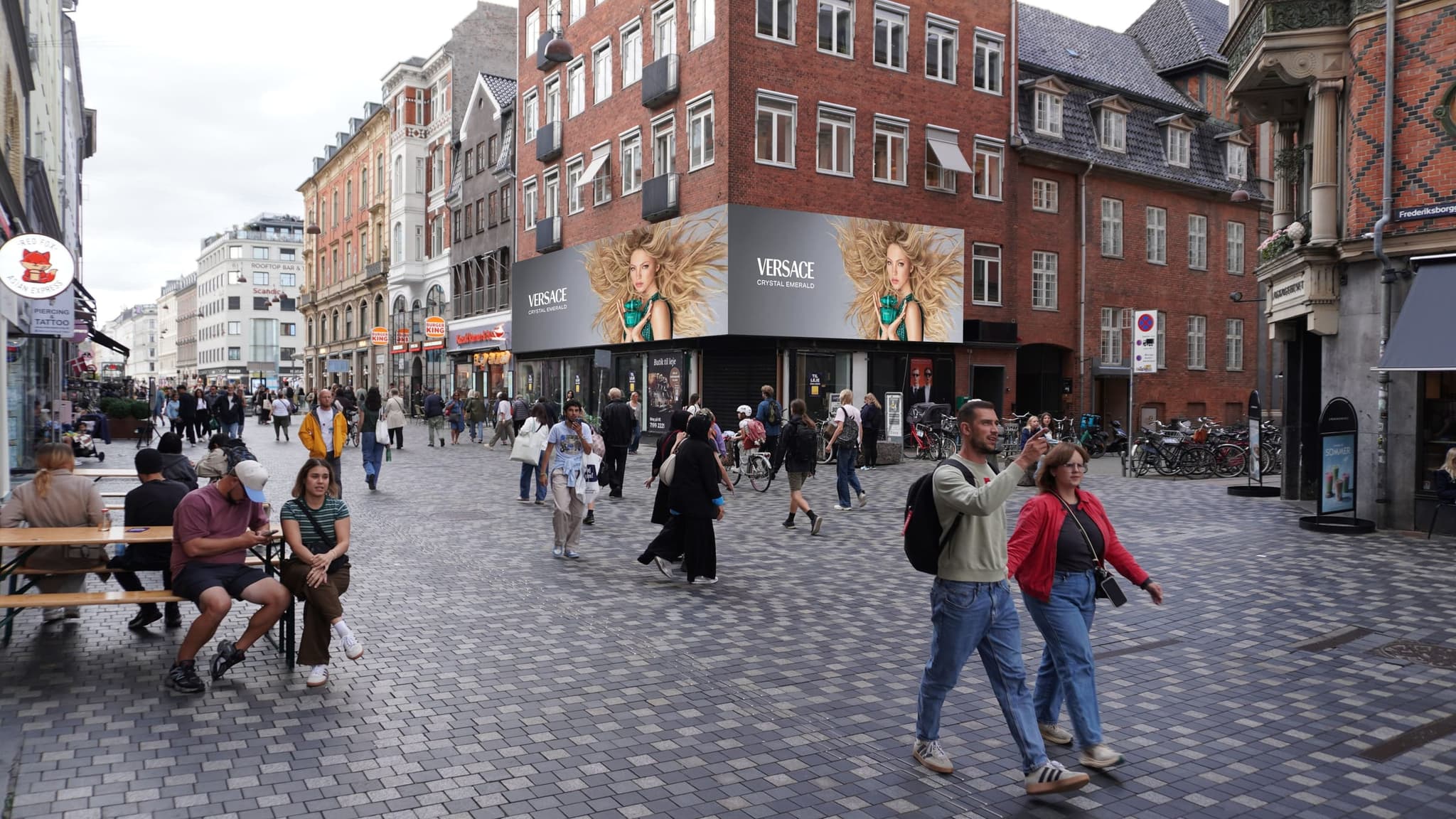
Facade advertising is the calmest format in the cityscape. No scaffolding period that shifts, no construction site dictating the calendar — just a banner on a facade or gable that hangs for months and builds awareness through repetition. Here is what you need to know before you book in Copenhagen.
What sets the price?
There is no list price for a facade. The price is set by four things, and they pull in different directions.
The surface. Formats in Copenhagen typically range from 20 to 80 m². An 82 m² panel at eye level on Strøget is a different product from a 25 m² gable on an arterial road — not just in size, but in who sees it and from how close.
The traffic. Around 70,000 people pass Frederiksborggade by Nørreport every day, the vast majority on foot. Pedestrians at eye level have time to read. It is the most expensive kind of attention, and it is priced accordingly.
The period. Facades are sold for long periods, often several months. The weekly price drops the longer you commit — that is the format's strength if you are building a brand over time.
Production and installation. Printing on banner fabric, installation and any removal are typically included in the price. Always ask whether the quote is all-inclusive, so you are not comparing apples with oranges.
Permits and fees
Advertising in public space in Copenhagen generally requires a permit from the municipality, and a fee is charged for advertising on facades facing a public road. The rules vary by zone and facade type, and a listed or conservation-worthy building is a case of its own.
On our own facades this is settled in advance, so there is no application or municipal fee for you. Only on scaffolding do we apply for a permit for each campaign, and there the fee is included in the quote. Read more about the rules in our guide to permits.
Facade or gable?
A gable is the blind end wall of a building. It is typically seen from a distance and from moving traffic, and it suits one big, simple message.
A facade faces the street and is seen from closer up. Here you can work with a little more content, because the viewer is standing still, walking past or cycling slowly.
Choose a gable for broad awareness. Choose a facade when your audience is pedestrians and you want them to read more than three words.
Where in Copenhagen?
The inner city and Strøget. Pedestrians, tourists, shopping. The formats are smaller, but the viewer is closer and has more time. The right surface for retail, experiences and anything that needs to drive store visits.
Nørrebro and the inner neighborhoods. Cyclists and commuters in slow-moving traffic. High frequency toward the same audience, day after day. Good for brands that want to get under the skin of a neighborhood.
The arterial roads. Drivers at speed and at a distance. Fewer seconds, but many repetitions. Here the gable is the right format, and the message must be readable in under two seconds.
Three questions before you book
- Who needs to see it, and how do they move? Pedestrian, cyclist or driver determines both the surface and the creative.
- For how long? Under four weeks is rarely a facade's strength — scaffolding is often better value there.
- What is all-inclusive? Print, installation and removal, and on scaffolding also the municipal permit and fee. Get it in writing.
If you have an address or a neighborhood in mind, ask to see the surface in a photo — not an illustration — and ask which way the traffic faces. That reveals more about the value than the square meter figure does on its own.