Aarhus is a commuter city. Most of the relevant exposure happens on the arterial roads and ring roads — not in the city center. That should shape how you read a placement.
How to read a placement in Aarhus
Four things determine whether a gable or facade is worth the money:
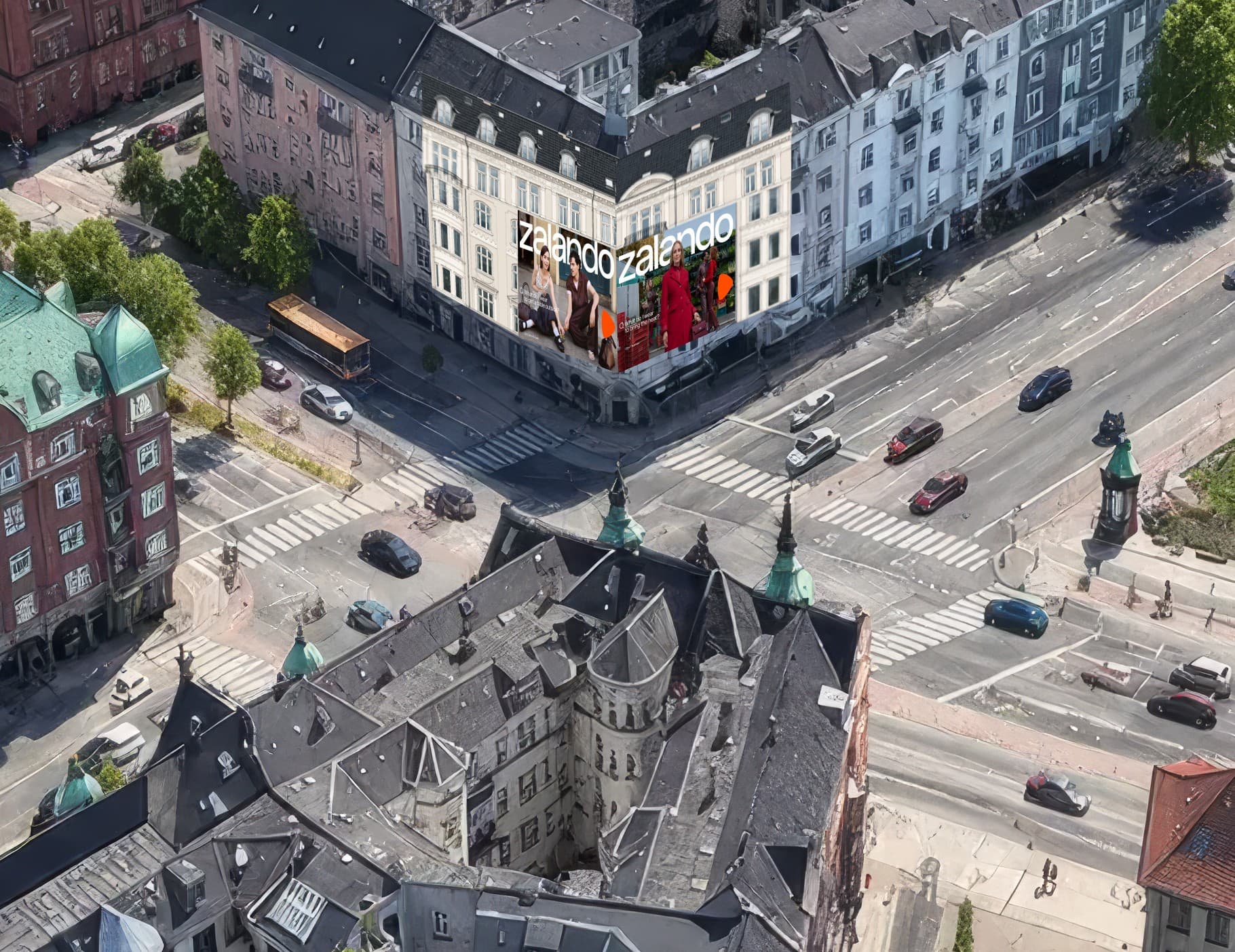
Direction. Is the traffic moving toward the space or away from it? A gable facing inbound morning traffic is seen by commuters on their way to work — at the end of the day when attention is highest.
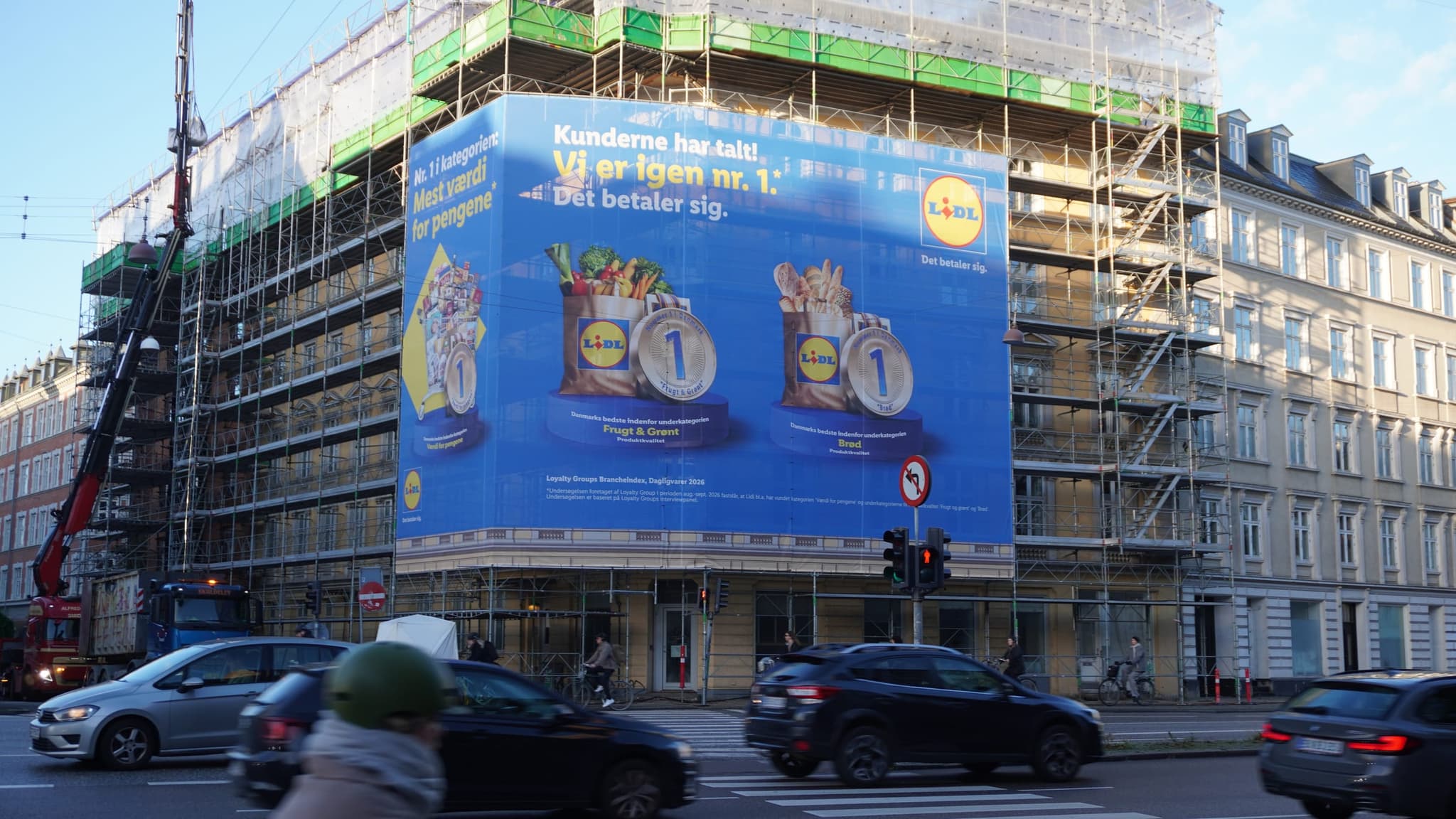
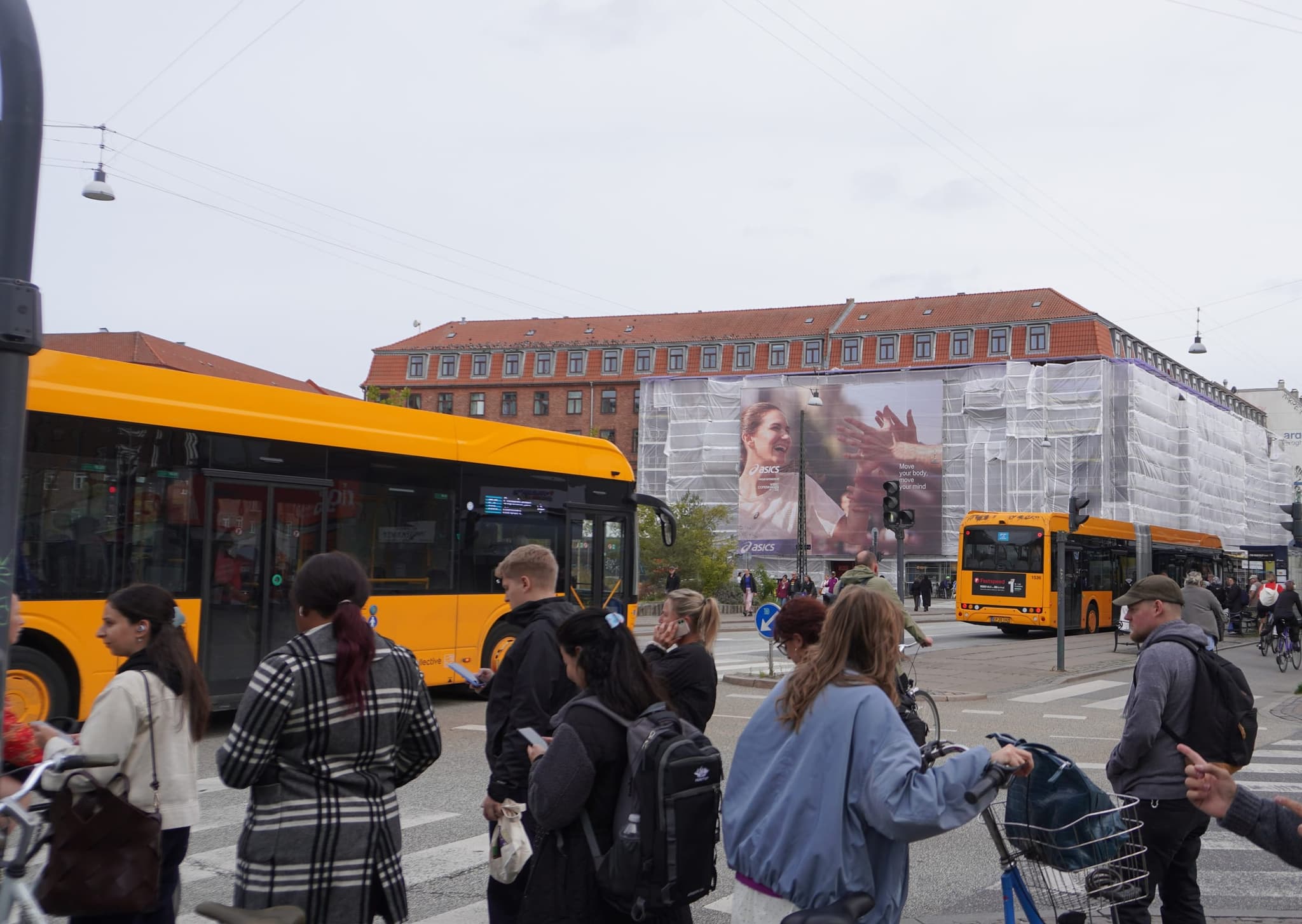
Speed and stopping. A traffic light or a slip road gives you seconds you don't get on an open stretch. Placements at signal-controlled junctions are systematically worth more than the traffic count alone suggests.
Clear sightlines. Trees, signage and masts eat into spaces. A gable that is clear in winter can be half-covered in July.
Repetition. Commuter traffic means the same people see the space up to ten times a week. That is the real strength of outdoor in Aarhus.
The ring roads
The ring road system distributes traffic around the city center and gathers commuters from several directions. Nordre Ringgade is one example, with 25,000 daily passers-by and signal-controlled junctions that create pauses in the traffic.
The formats here are typically smaller — 20 to 30 m² — but that is rarely a problem. On a gable seen from a car, legibility matters more than area.
The arterial roads
Silkeborgvej is one of the busiest, with 35,000 daily passers-by. The arterial roads have the highest frequency of repeated exposure to the same audience, which makes them well suited to building awareness over several weeks.
Other strong corridors in the city are Skanderborgvej, Randersvej, Viborgvej and Grenåvej — all with the same underlying logic: commuter traffic in fixed patterns.
The city center
The city center delivers a different kind of exposure: pedestrians, students, shoppers. The formats are smaller and the price per square meter is higher, but the audience is closer and has more time.
If you need to drive visits to a physical store in the city, the center makes sense. If you need to build broad awareness, you get more for your money on the arterial roads.
Timing across the year
- Spring and autumn are the strongest periods. Bright enough for good visibility, and people are in their normal routines
- Summer means leaves on the trees and fewer commuters in the city during the holiday weeks
- Winter brings shorter daylight hours, but the spaces are free of foliage, and dark hours under street lighting can work well for high-contrast designs
Practical checks before you book
Always ask to see a photo of the actual space — not an illustration. Ask which direction the space faces, whether there are traffic signals nearby, and what the sightlines look like at the time of year your campaign will run.
Those three questions reveal more about a placement's value than the traffic count does on its own.